Amazon launches AWS for logistics
After fourteen years of internal use, Amazon began monetizing its automation stack — the freight stocks noticed within hours
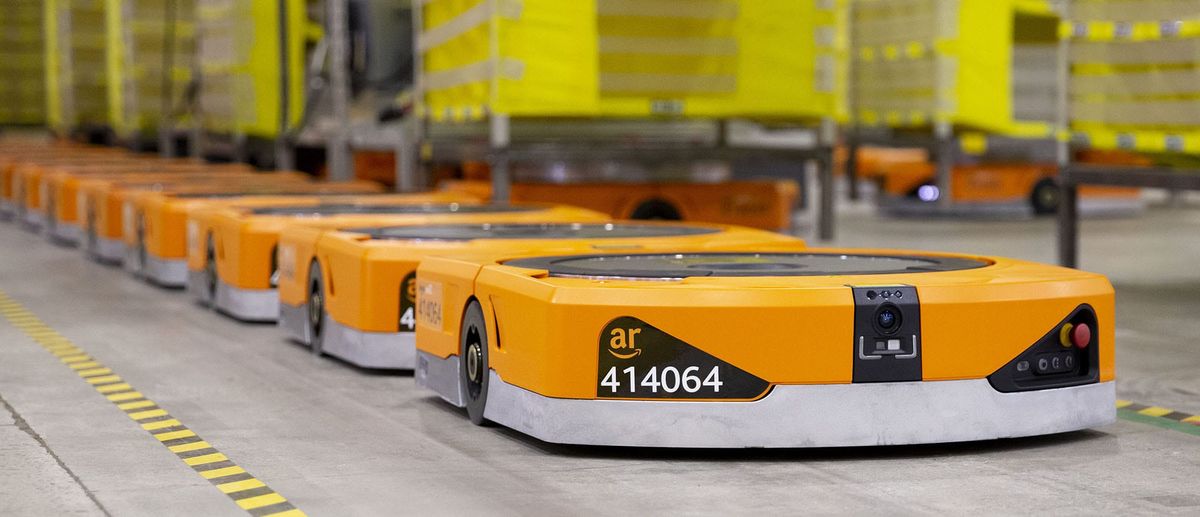
At an Amazon fulfillment center outside Shreveport, Louisiana, ten times as many robots work the floors as at any of the company's previous-generation warehouses. At the building's center sits Sequoia, a multilevel inventory system that holds 30 million items. Sequoia files the goods, and Hercules and Titan move the pods between stations. Cardinal stacks; Sparrow picks; Proteus, the company's first fully autonomous mobile robot, navigates the outbound dock alongside human workers. Above all of them runs DeepFleet, a generative AI traffic-control model that lifts the fleet's travel efficiency by roughly ten percent. Until Monday morning, all of that capacity worked only for Amazon. By the afternoon, it was for sale.
The product is called Amazon Supply Chain Services, and the announcement reads, on the surface, like an expansion into freight. Procter & Gamble has signed up to move raw materials and finished goods. 3M is using the network to carry products from manufacturing sites to distribution centers. Lands' End is pooling inventory across sales channels; American Eagle Outfitters is shipping its own e-commerce orders directly. Peter Larsen, the eighteen-year Amazon veteran running the new business, framed the launch as the company "bringing the infrastructure, intelligence, and scale of its supply chain services—proven over decades—to businesses everywhere, much like Amazon Web Services did for cloud computing."
The freight market took the analogy at face value. By Monday afternoon, FedEx had fallen as much as ten percent in its worst day in more than a year, and United Parcel Service had dropped the same. GXO Logistics, which actually runs warehouses for other companies, fell thirteen percent; Old Dominion Freight Line, a trucker, lost six. Amazon was up.
This article is for Vector members. Start a 7-day free trial to keep reading.
Start your free trial