Karpathy will make Claude train Claude
Behind the marquee hire sits a specific bet: that AI-accelerated research can substitute for the compute Anthropic doesn't yet have
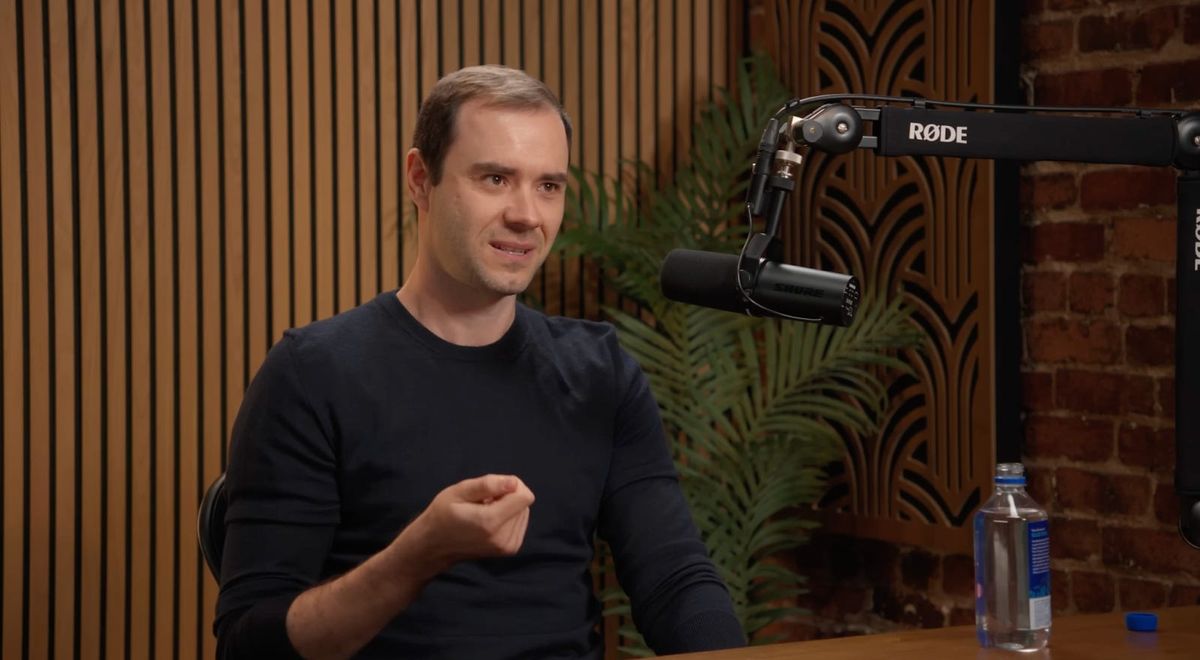
In March, Andrej Karpathy ran an experiment that he later described as "part code, part sci-fi, and a pinch of psychosis." Karpathy, a founding member of OpenAI who left twice (first for Tesla in 2017, then in 2024 to start an education company), had been publicly stress-testing frontier models for months. The setup was simple: he wired an AI coding agent to a small language model and let it run unsupervised for two days. Over forty-eight hours the agent conducted 700 experiments on the training code, discovered twenty optimizations, and — when the same tweaks were applied to a larger model — reduced training time by 11%. Karpathy named the workflow autoresearch, posted the results to X, and two months later Anthropic hired him to do it at scale.
The job's specifics are unusual for a star hire. Reporting to Nick Joseph, a former OpenAI engineer who runs the group responsible for Claude's training runs, Karpathy joined Anthropic's pre-training team this week. The remit, according to Joseph, is narrower than the marquee: Karpathy will "build a team focused on using Claude to accelerate pretraining research itself." On May 19th, when Karpathy announced the move on X, the post drew nearly three million views in its first hour.
Most coverage has read the move as a talent-war story — another OpenAI alum at the chief rival, another sign of Anthropic's emergence as a magnet for senior researchers. The talent frame is the surface; the brief is the structure.
Compound interest
Dario Amodei, Anthropic's chief executive and a former OpenAI research lead, set out the wager in a January essay titled "The Adolescence of Technology." "Because AI is now writing much of the code at Anthropic," he wrote, "it is already substantially accelerating the rate of our progress in building the next generation of AI systems." The feedback loop, he added, "is gathering steam month by month, and may be only 1–2 years away from a point where the current generation of AI autonomously builds the next." Karpathy's hire is the personnel signal that Amodei means it.
This article is for Vector members. Start a 7-day free trial to keep reading.
Start your free trial