
Revolut's US bank charter is a license to mine data
The OCC has conditionally approved Revolut's American bank, and the prize is credit data its model has never seen
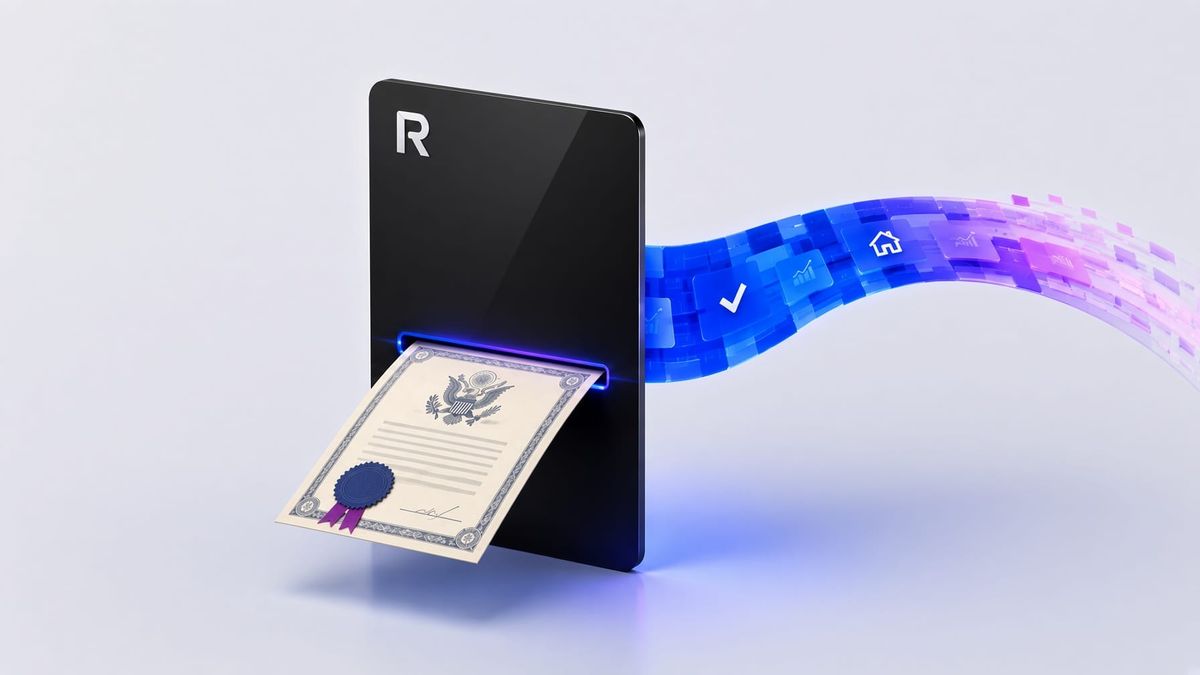
REVOLUT NAMED its foundation model Pragma, from the Greek for a thing done, which is more than most fintechs can say about their American charter applications. On September 2nd the Office of the Comptroller of the Currency gave conditional approval to Revolut Bank US, a national bank to be seated in Stamford, Connecticut, with a launch penciled for 2027 once the FDIC and the Federal Reserve add their signatures. The decision took 181 days from filing, against the 212 days Bunq, a Dutch rival, spent in the same queue before being told no.
Nik Storonsky, Revolut's founder, describes the goal as the world's first truly global bank, and the company's logic is straightforwardly territorial. It has 80m customers, roughly the population of Germany, and booked £4.5bn ($6bn) of revenue last year at a pre-tax margin most lenders would frame. A full British banking license arrived in March, five years after Revolut first applied; a Mexican banking license arrived in January; Brazil, Colombia and Peru are in progress. America, where Revolut serves about 1m customers by renting the balance sheets of partner banks, is the largest market in which it does not own the plumbing. The charter, with $500m committed and Cetin Duransoy, a Visa and Capital One alumnus, installed as US chief executive, is meant to fix that.
Look at what Revolut spent the summer building, however, and the charter is plainly a data acquisition. In August the company launched Revolut Research, an in-house lab whose headline product is Pragma, an encoder-style transformer pre-trained on some 24bn banking events from 26m customers in more than 100 countries. One shared model now scores credit, catches fraud and recommends products, replacing the stack of single-purpose systems every bank runs; Revolut claims a 65% jump in fraud recall and a more than doubling of one credit-scoring benchmark over its own baselines. The whole thing runs on some 200-odd Nvidia H100s, a fleet a frontier lab would keep in a broom cupboard. The model is cheap. What it eats is not.
This article is for Vector members. Start a 7-day free trial to keep reading.
Start your free trial