SpaceX and the Infinity Story
Musk's valuations always ran on an ever-enlarging future — this time he sold it to retail, who can't roll it forward
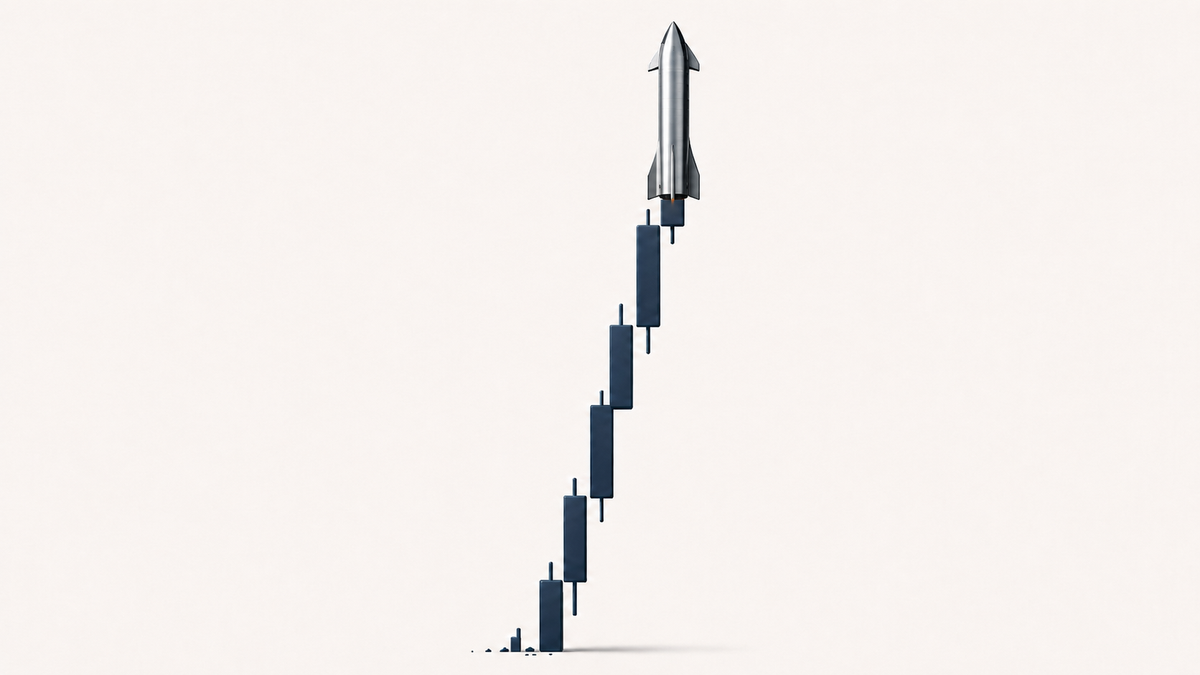
On Sunday night, hours before SpaceX would trade through its first full session as a public company, Elon Musk went on X and put a number into the world. The company, he wrote, "might be able to reach approximately" $1 trillion in revenue by 2030, and he would be surprised if it came in lower the year after. SpaceX booked $18.7 billion last year. The promise was for a fiftyfold expansion in five years, delivered the same weekend the largest initial public offering in history had already priced the company above $2 trillion, and on Monday the market answered the promise with another 20% gain.
This is the oldest instrument in Mr Musk's kit, and it is worth naming precisely. Call it the infinity story: a valuation anchored not in what a company earns but in a future the founder keeps enlarging faster than reality can close the distance. The numerator is whatever the present can be made to bear; the denominator is always the future, and the future has no ceiling. The number can keep climbing because the story is built so that nothing it contains is ever marked wrong, only deferred.
This article is for Vector members. Start a 7-day free trial to keep reading.
Start your free trial