The AI summit
Every formal agenda item at the Trump-Xi summit is, on inspection, an AI negotiation
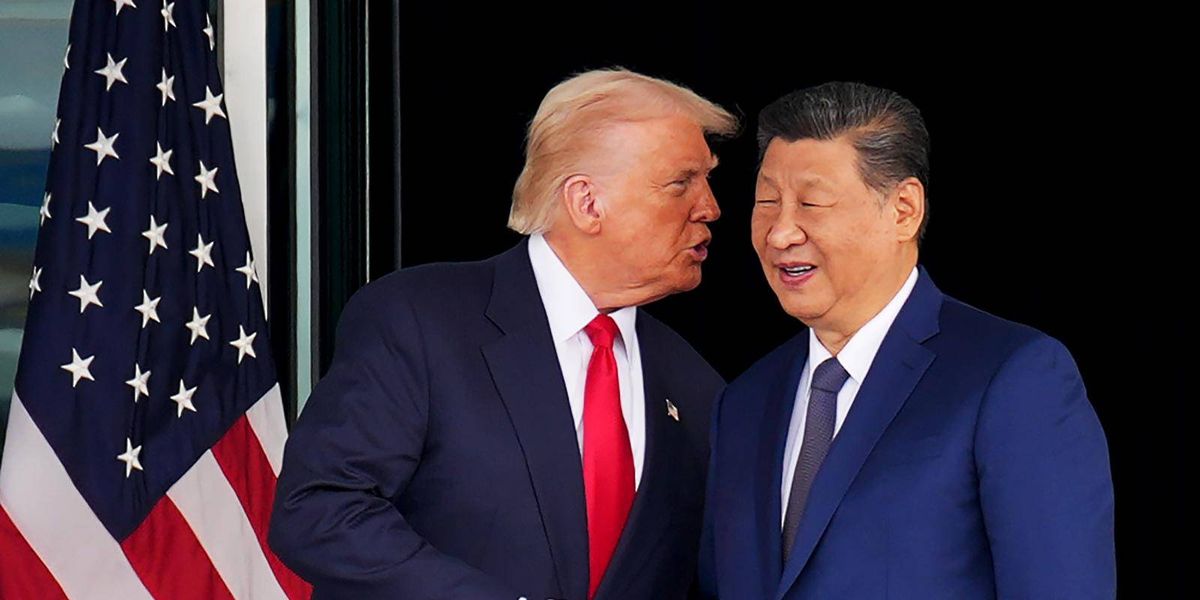
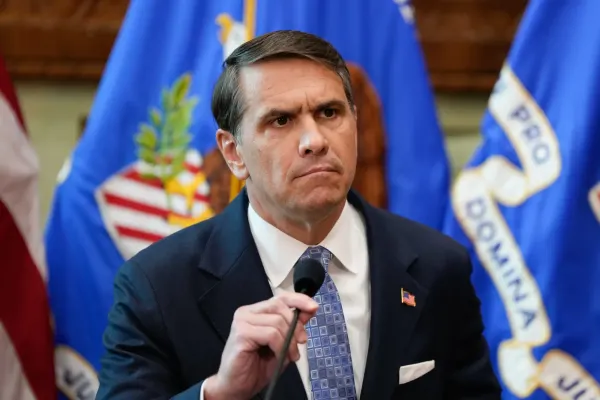
When a reporter at the Chinese Foreign Ministry's regular press briefing on May 7th asked spokesperson Lin Jian who, on Beijing's side, would lead the artificial intelligence track at next week's summit between Donald Trump and Xi Jinping, Lin gave the answer Beijing reserves for questions it does not yet wish to answer: there was, he said, "no information available at this time." The talks themselves, leaked four days earlier to the Wall Street Journal, were already public. Scott Bessent, the Treasury Secretary, had been named to lead the American side. The Chinese seat remained, conspicuously, empty.
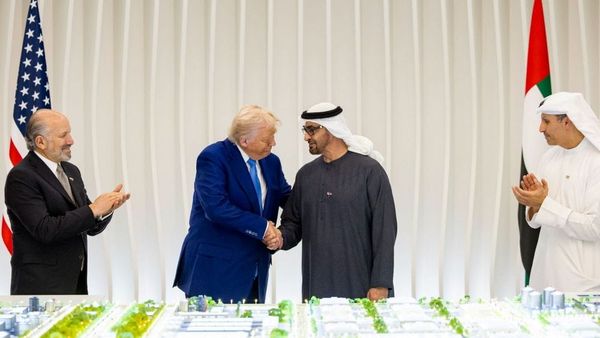
The named AI track is the agenda item that has drawn most of the international coverage in the run-up to the May 14-15 summit in Beijing, the first state visit to China by a U.S. president since 2017. It is also, by some distance, the least likely to deliver. The dialogue, as outlined in the Journal's reporting and discussed in subsequent analyses from the Council on Foreign Relations, would address three areas of mutual concern: the risk of unexpected behavior in advanced models, autonomous weapons systems operating outside their intended envelopes, and attacks by nonstate actors using powerful open-source tools. Under the previous administration, the bilateral AI engagement followed a clear arc — agreed to at the Biden-Xi summit at Filoli Estate in Woodside, California in November 2023, instantiated as a single intergovernmental session in Geneva in May 2024, and supplemented by a leaders-level statement at APEC Lima in November 2024 that humans rather than AI systems should make decisions about nuclear weapons use. The Geneva session produced no operational mechanism, and the Lima statement, the only substantive product of the engagement, was not negotiated through the AI track but through strategic stability talks. Rush Doshi, who led the Biden-era dialogue and now directs the Council on Foreign Relations' China Strategy Initiative, has argued that the persistent limiter on these talks was Beijing's choice to staff them through its foreign ministry rather than a technical agency, leaving the people in the room without authority to commit anything operationally.
Going into the summit, that pattern has not broken. Beijing has reportedly involved Vice Finance Minister Liao Min in preliminary discussions but has not yet designated a counterpart to Bessent, whose own assignment to the AI track — rather than that of Michael Kratsios, the director of the White House Office of Science and Technology Policy — reflects the more candid Washington view of what the dialogue is now for. Treasury's writ is capital flows, sovereign exposure, and market contagion: what the American side of the AI competition increasingly looks like in operational terms. The named line item went to Treasury because it is the legible one; AI policy itself has diffused into every other portfolio at the table. Whatever the formal AI track produces (a communique, perhaps an outline of an AI hotline, possibly nothing) will not be the place where the substance of the Sino-American AI competition is transacted this week.
That competition will be transacted instead on every other line of the agenda.
Track changes
Start with trade. The framework that U.S. Trade Representative Jamieson Greer's office has been advancing, organized around what has been publicly discussed as a "Board of Trade" concept, is on its face an attempt to institutionalize the tariff system into something more rules-based. The likely deliverables of the week — a potential Chinese commitment to purchase 500 Boeing aircraft, sustained agricultural imports, an extension of the truce that brought tariffs on Chinese goods from 57 percent down to 47 percent at last year's Busan meeting — sit inside that framework. Inside the framework also sits the post-2022 architecture of chip export controls: the watershed BIS package of October 2022, the Entity List, the rules constraining Huawei and SMIC, the licensing regime that has governed Nvidia's AI accelerators in the Chinese market. Tariff levels move; the chip controls have not. Any rebalancing that produces a Boeing deal also implicitly accepts the chip-controls regime as the structural baseline of the broader relationship. The chip-controls regime is the AI piece of the trade conversation, and it is the part of the framework that neither side has been willing to move.
The critical minerals piece is more explicit about its AI dimension. Gallium and germanium, which Beijing placed under export controls in July 2023, are direct semiconductor inputs without ready substitutes; rare earth elements, and the magnets manufactured from them, feed data center cooling systems, robotics actuators, and the propulsion stacks of autonomous platforms. When Xi has reached for what an analysis at the Council on Foreign Relations called China's "break glass" tool, restricting rare earth and magnet flows as Beijing did in April and again in October of last year, the AI infrastructure stack has been among the highest-leverage targets. The most concrete deliverable likely to come out of this week's summit, by most analyst accounts, is another extension of the critical minerals truce that has kept rare earths flowing to American firms. That truce will function, among other things, as a truce on the AI supply chain.
Taiwan, when stripped of its diplomatic packaging, is the fab geography conversation. Frontier model training and inference now run, almost without exception, on accelerators produced at a small cluster of leading-edge nodes operated by Taiwan Semiconductor Manufacturing Company in Hsinchu. That cluster is among the most strategically valuable real estate on earth; whatever Trump and Xi say about Taiwan this week, the underlying conversation is about who controls the manufacturing geography of the global AI compute stack. U.S. arms sales to Taiwan, which Xi pressed Trump on directly in their February phone call, and which were the implicit subtext of Kuomintang chair Cheng Li-wun's recent Beijing visit, function partly as a defense of that infrastructure. Taiwanese officials, well aware of the dynamic, have privately told Bloomberg what one of them characterized as their deepest fear: "to put Taiwan on the menu" of a Trump-Xi conversation. The menu, on this reading, has TSMC on it.
Even the nuclear arms control track has already absorbed AI. The leaders-level agreement that humans rather than AI systems should make decisions about nuclear weapons use was the single most substantive product of the Biden-era U.S.-China AI engagement, and it lived inside strategic stability talks rather than the formal AI dialogue. Trump has called publicly for a new arms control framework that would include China, an aspiration that runs counter to long-standing Chinese resistance, and any movement on that question this week will be a movement that the AI-nuclear crossover has already been institutionalized into. The arms control conversation is, among other things, the AI-targeting conversation.
What the summit will produce, on present indications, follows from that diffusion. The formal AI track will produce a communique, perhaps an outline of a hotline structure, almost certainly nothing operational. The other four lines, by contrast, will produce concrete moves: a Board of Trade announcement, a critical minerals truce extension, a posture on Taiwan arms sales, perhaps a nuclear arms control gesture. Each of those deliverables will be, in its own register, an AI competition data point. The trade framework will lock in the chip controls; the minerals truce will lock in the AI supply chain; the Taiwan posture will write the fab geography into the bilateral framework; the nuclear framework, if it materializes, will deepen the AI-nuclear crossover already in place.
Lin Jian's "no information available at this time," delivered to a reporter in Beijing on May 7th, was, in its own way, the most accurate description of the formal AI track that has been offered. The Chinese seat will not be filled by Thursday, and the communique will not contain an operational mechanism. The AI conversation, however, will run all week, on every other line of the agenda, conducted by every other portfolio in the room. The headline going into the week was that AI is on the agenda. The agenda has had AI underneath every line all along — in pieces, in other rooms, under other names.