
The cap table became the competition
Microsoft and Amazon bankrolled the frontier labs and now sell cheaper models against them, on the same clouds those labs depend on
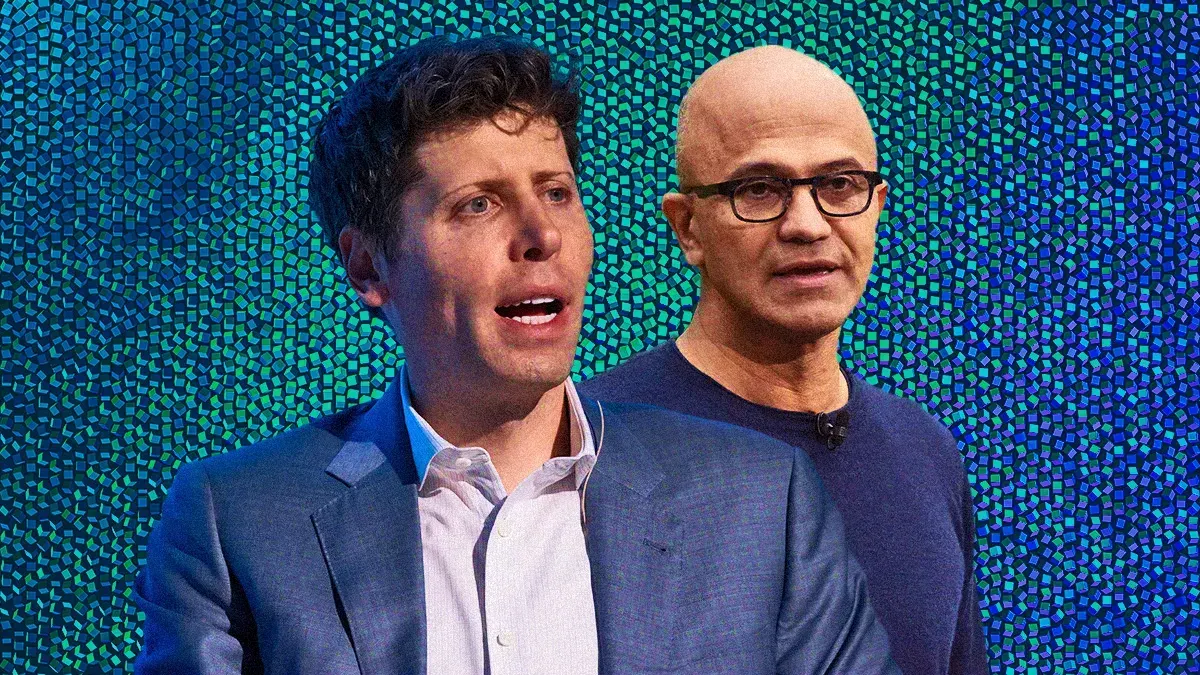
At Microsoft's Build conference in San Francisco in early June, Satya Nadella, the company's chief executive, told a room of developers that the age of merely renting intelligence was ending. "We believe the time has come," he said, "for every company to move from consuming a frontier model to fully participating at the frontier." The remark was framed as an invitation, though it read more like a declaration of independence. Microsoft has put roughly $13 billion into OpenAI and as much as $5 billion into Anthropic. Minutes earlier, it had unveiled seven of its own models built to compete with theirs.
The seven, badged MAI, were trained in-house; the flagship, a reasoning system called MAI-Thinking-1, was built from scratch rather than distilled from a larger rival, and Mustafa Suleyman, who runs Microsoft's AI division, claimed that a version tuned for the consultancy McKinsey had bested OpenAI's GPT-5.5 on quality at roughly a tenth of the cost. Whether that figure survives contact with independent benchmarks is a separate question. The signal was the point: the largest financial backer of the two leading AI labs now intends to sell against them, on its own cloud, at a price they will struggle to match.
This article is for Vector members. Start a 7-day free trial to keep reading.
Start your free trial