
The last thing ChatGPT was supposed to become
Sam Altman called advertising a last resort. Four months later, any business with a campaign brief can buy a slot inside the world's most-used AI
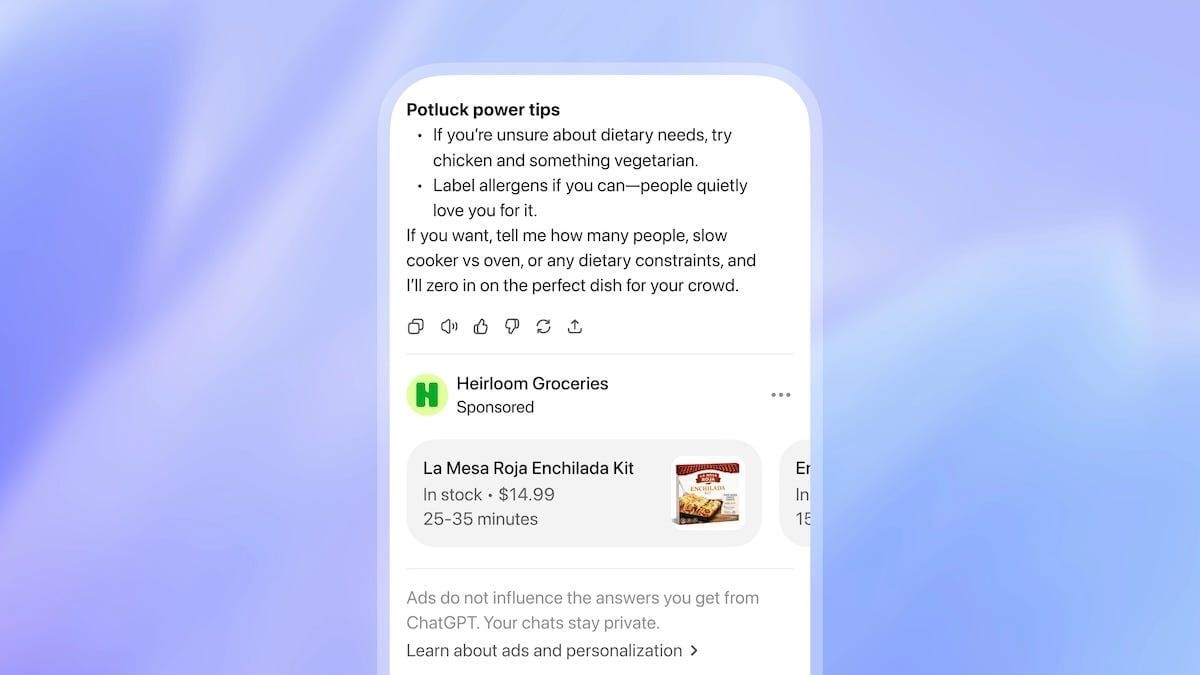
On Monday, Asad Awan, OpenAI's head of monetization, stepped into a press briefing to deliver a message about what was, for now, still being called an experiment. The advertising pilot OpenAI launched in February — with a closed roster of large brands, a six-figure minimum spend, and a single pricing model — would now open to any American advertiser through a self-serve dashboard called Ads Manager. There would be cost-per-click bidding alongside the existing $60 CPM. There would be a conversions pixel and a Conversions API. There would be no minimum spend at all.
Awan used the language of an ad-platform launch — fill rates, relevance signals, third-party measurement on the way. He said ads "do not influence the core organic model" of ChatGPT, and that the company was taking a deliberately conservative approach. It was the vocabulary of a company that had done this many times before, even though OpenAI had not, until Monday, finished doing it for the first time.
The pace is the story. In January, the reported floor on a ChatGPT ad campaign was $250,000; by February, $200,000; by April, $50,000; on Monday, zero. CPM was the only billing model three months ago; on Monday, cost-per-click went live with recommended bids of three to five dollars. Three months ago, advertisers had to route campaign data through OpenAI or an agency to see anything; on Monday, they could log into ads.openai.com and watch impressions tick up in real time.

This is what an ad business looks like when it is being built under deadline pressure. The American pilot crossed $100 million in annualized revenue six weeks after it began, according to a March Reuters report. The company has told investors it expects $2.5 billion in ad revenue this year and roughly $100 billion by 2030, per The Information. It is also projected to lose $14 billion in 2026, and is preparing an initial public offering whose timing depends on a credible revenue diversification story. The free tier — 95% of the roughly 900 million weekly users — has been quietly reclassified from a costly customer-acquisition expense to monetizable inventory.
This article is for Vector members. Start a 7-day free trial to keep reading.
Start your free trial