The Vatican enters AI governance
Pope Leo's first encyclical launches alongside an Anthropic co-founder — a sign that AI's social license is being written outside the industry
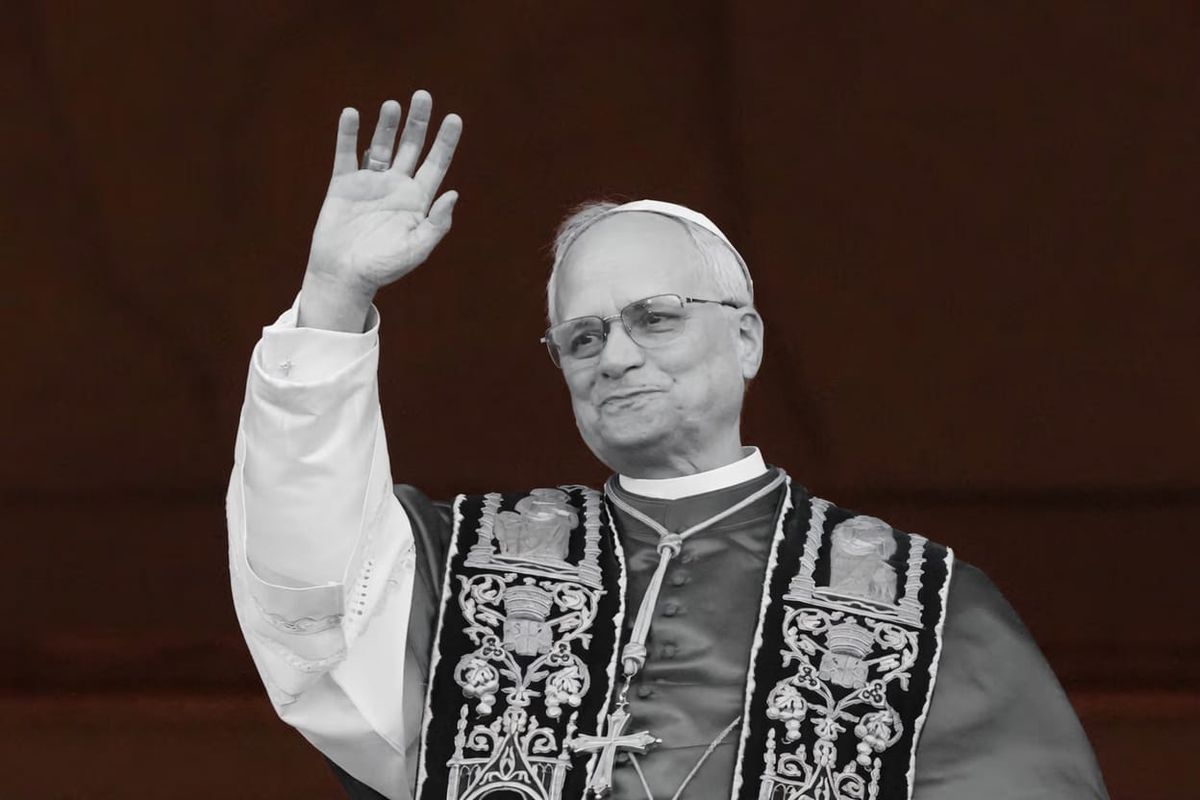
CHRISTOPHER OLAH left university at eighteen, a Canadian National AP Scholar without a degree and a Thiel Fellow with a research interest in what was going on inside neural networks. The decade since — three years at Google Brain, three at OpenAI, five at Anthropic, the San Francisco laboratory he co-founded in 2021 and which was valued in February at $380bn — has been spent on a single problem: how to make a model legible to the people who built it. On May 25th, at half past eleven Rome time, Olah will sit beside Cardinal Pietro Parolin, the Holy See's secretary of state, on a panel at the Vatican Synod Hall, presenting Magnifica Humanitas — Pope Leo XIV's first encyclical, and the first papal social encyclical addressed to the AI revolution. Of the figures sharing the dais with the pope, Olah will be the only one who does not work for the Catholic Church. He will also be the part of the panel worth paying attention to.
Interpretability is the rare branch of AI safety that translates cleanly into other intellectual traditions. Most secular ethics discourse around frontier AI dwells on consequences — how the systems behave, where the outputs land. Interpretability dwells on what the systems are: what concepts they have learned, how those concepts are arranged, whether a researcher with sufficient time and tooling can make a model legible to the people who built it. Asked to pick a representative of the AI industry to share the stage at the launch of Magnifica Humanitas, Pope Leo XIV did not pick an alignment researcher or a policy chief. Leo — born Robert Prevost in Chicago, a math major at Villanova before he was an Augustinian missionary in Peru for twenty years, the first American to occupy the chair of St Peter and a year into a pontificate that has already made artificial intelligence its signature issue — picked the man whose research career has been to make a system intelligible to its makers. That is a substantive intellectual claim about what the Vatican thinks the AI question is.
To read the encyclical as a religion story — pope meets AI lab; doctrine meets disruption — is to miss what is actually happening. AI's social license to operate, the unspoken permission that lets the technology exist in the markets it is now entering, is being written this year by a series of institutions outside Silicon Valley, in vocabularies the labs themselves do not natively speak. Magnifica Humanitas is one entrant in a crowded field, and the most globally distributed one.
Roma locuta
The field of AI rule-writing, as it now stands, divides among four institutions writing in four different grammars. Brussels works the regulatory dialect — risk tiers, conformity assessments, designated authorities. Beijing works the sovereignty dialect — domestic compute, domestic data, models obliged to produce "core socialist values." The standards bodies (ISO, IEEE, NIST) work the procedural dialect — documentation requirements, evaluation protocols, governance frameworks. The Vatican, with Magnifica Humanitas, works the moral one — human dignity, labor displacement, what is owed to the person at the other end of the system. None of these speaks the labs' own register of benchmarks, capabilities, alignment, and agents, and yet the labs must operate inside all of them.
The labs have priced compute, talent and capability as the scarce inputs of the AI revolution. The scarcer input, it is turning out, is moral legitimacy: the right to operate in jurisdictions where regulators and the public do not accept Silicon Valley's framing as authoritative. Anthropic's $380bn valuation, OpenAI's larger one, sit atop global businesses that run across scores of jurisdictions, each with its own developing answer to what AI is for, most of those answers written by people who have never sat in a Stanford seminar room. The Vatican is the vivid case because of its reach — roughly 1.4bn baptized Catholics — and it is the latest of several to enter the field this year.
Among the frontier labs, Anthropic has been the most consistent investor in distribution to the institutions writing this moral grammar. Dario Amodei, the lab's chief executive, has testified before the U.S. Senate, met the White House chief of staff in April, and in March spun out the Anthropic Institute, a think tank led by Jack Clark, the company's head of policy and a co-founder. The Vatican panel is the latest visible move in what has become a deliberate, multi-year tour through the rooms where AI legitimacy is being assigned. Where OpenAI has built product distribution, Microsoft channels, and consumer brand, Anthropic has built something quieter — a network of people who do not write code but write the rules. The asymmetry, slow to register inside the industry, is beginning to show outside it.
What an encyclical does is provide moral vocabulary that other actors — politicians, jurists, unions, NGOs — pick up and use to argue their own cases. Take Rerum Novarum, Leo XIII's 1891 encyclical on industrial labor: it legitimized Catholic union organizing where the Church had previously been suspicious; it gave Christian Democratic parties across Europe their moral vocabulary for a century; it shaped the language of state intervention that Franklin Roosevelt's New Dealers later drew on. Magnifica Humanitas will land in a different Church: Catholicism's mass is no longer European; it is concentrated in Latin America and the Philippines, and the fastest-growing share now sits in sub-Saharan Africa. These are the political environments in which the encyclical will most plausibly translate into legislation — places where Catholic identity remains operative in elective politics, where AI-driven labor displacement is already acute, and where Brussels-style regulation is not on the menu. AI ethics distributed through Lagos, Manila and São Paulo, rather than through ethics centers in Palo Alto.
None of this will be visible at the Synod Hall on May 25th. The cameras will catch a pope in white, a cardinal in scarlet, a theologian in lay clothes, and the researcher who left university at eighteen — the only person on the dais who works in an industry that thinks of itself as making the future. Most labs scanning the photographs will read the moment as a curious religious turn; the few that read Magnifica Humanitas for what it is — an institution with a thousand-year time horizon entering AI governance through the one mechanism it possesses — will be reading the right document.