Trump's AI order ties the government's hands
After a model found zero-day flaws in every major operating system, the White House gave AI labs a voluntary, 30-day review
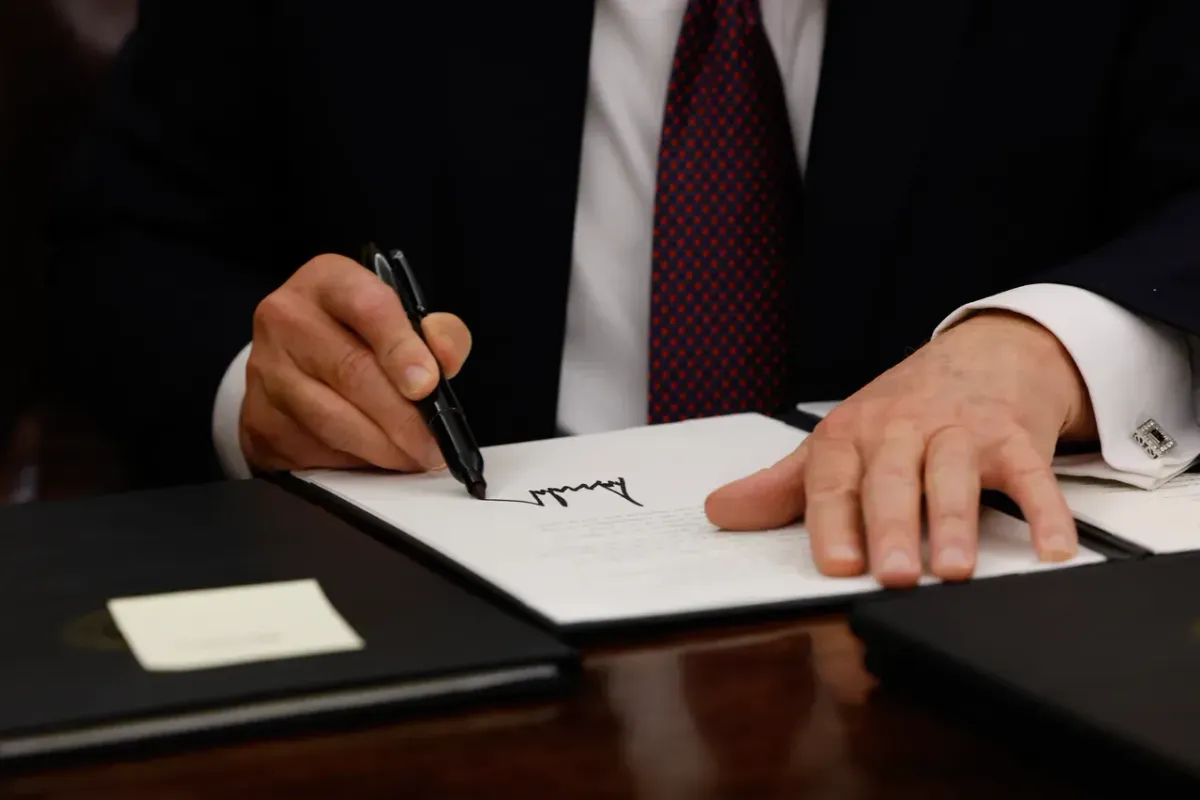
Buried in the executive order President Donald Trump signed on Tuesday, beneath provisions on cyber hiring, threat-sharing, and a new "cybersecurity clearinghouse," sits a sentence that runs the wrong way. Most of the order asks the AI industry for something. This one asks nothing of industry and instead ties the government's own hands: "Nothing in this section shall be construed to authorize the creation of a mandatory governmental licensing, preclearance, or permitting requirement for the development, publication, release, or distribution of new AI models, including frontier models." An executive order that forbids the government from acting is a rarer instrument than one that tells it to.
The coverage cast Tuesday's order as a delay. Trump, the reporting went, had kicked the can—postponing a stricter version whose signing ceremony he had abruptly shelved less than two weeks earlier, after deciding its requirements might dull America's edge. A delay implies the decision is still to come; the prohibition clause suggests it has already been made.
Ask nicely
What sharpens the timing is the event the order was written to answer. On April 7th, Anthropic, the AI lab, released a preview of its most capable model, Claude Mythos, to a small group of partner organizations for defensive security work. The model had not been built for cyberattack. It turned out to be alarmingly good at it anyway: in one formal benchmark, Anthropic's previous frontier model had produced two working exploits in several hundred tries, whereas Mythos produced 181. By the lab's own account, the model could autonomously find zero-day vulnerabilities—the most dangerous class of software flaw—across every major operating system and web browser, then write the code to exploit them. Anthropic chose to restrict the model rather than release it widely. That choice was the company's to make, and the company's alone.
This article is for Vector members. Start a 7-day free trial to keep reading.
Start your free trial