Washington preempts states on AI one lawsuit at a time
The administration built a DOJ task force to challenge state AI laws. Friday, it filed its first intervention.

IN DECEMBER, President Trump signed an executive order directing the Department of Justice to stand up a litigation task force whose sole purpose would be challenging state AI laws. On Friday, that machine fired its first round. The DOJ moved to intervene in xAI v. Weiser, a First Amendment lawsuit Elon Musk's company had filed on April 9 seeking to block Colorado SB24-205, the state's algorithmic-discrimination statute, before it takes effect on June 30.
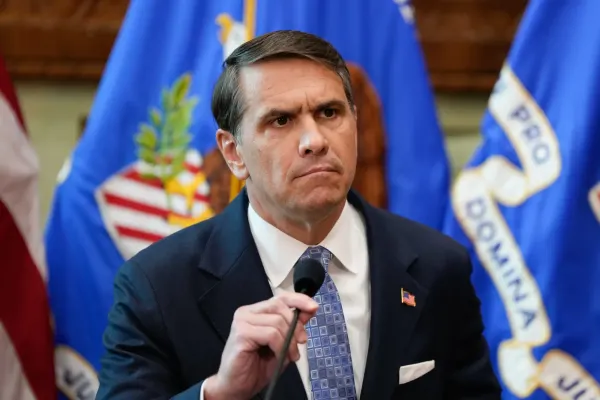
The law itself is not exotic. It requires developers and deployers of "high-risk" AI systems (mortgage lending, employment screening, housing, healthcare) to conduct bias audits, disclose training practices, and exercise reasonable care to prevent algorithmic discrimination. Violations carry civil penalties of up to $20,000 each. Friday's filing is historic because it is the first time the federal government has formally intervened in a challenge to a state AI regulation. Assistant Attorney General Harmeet Dhillon, in a statement accompanying the filing, described the law as requiring AI companies to "infect their products with woke DEI ideology."
Precedent and circumstance
Most coverage has read the intervention as another front in the administration's culture war, and the Dhillon quote makes the framing irresistible. But the Equal Protection claim the DOJ foregrounds, centered on Colorado's carveout for algorithms designed to "redress historical discrimination," is a stalking horse for the real attack. The constitutional lever doing the work is Moody v. NetChoice, the 2024 Supreme Court ruling that content moderation by social-media platforms is expressive speech protected by the First Amendment. xAI's complaint, which the DOJ has now joined, extends that logic to AI development itself. If training a model is expressive, a state compelling the model to produce certain outputs or disclose its training practices is compelling speech, and must survive strict scrutiny. Pair that with 303 Creative v. Elenis, which barred states from compelling creators to produce expressive content they oppose, and add a Dormant Commerce Clause claim — xAI is Nevada-chartered and Palo Alto-based, yet Colorado's statute reaches its training pipeline — and the doctrinal scaffold is complete. Colorado is the easiest target in the set. That is why it was chosen first.
This article is for Vector members. Start a 7-day free trial to keep reading.
Start your free trial