Bernie's plan to nationalize the AI firms
Sold as a public dividend, the bill hands a federal commission board seats and a veto over major AI firms
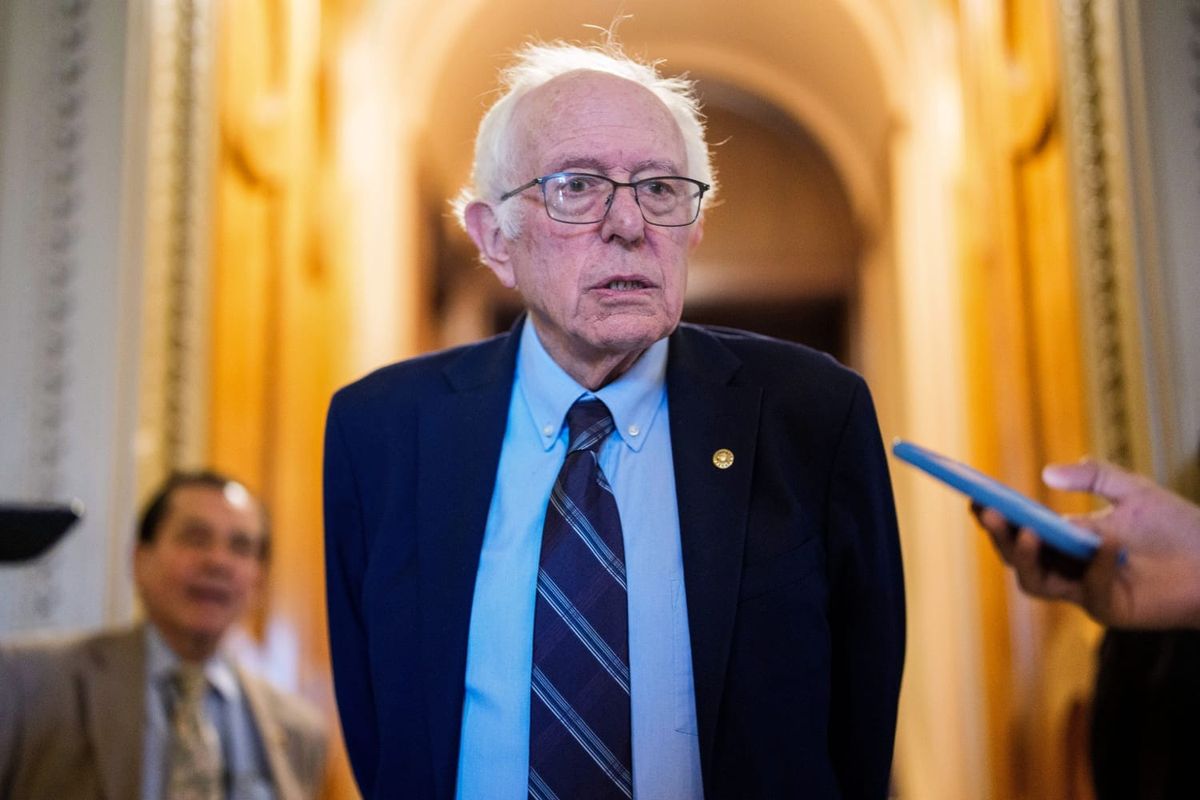
The headline figure in the American AI Sovereign Wealth Fund Act, the bill Bernie Sanders, the independent senator from Vermont, sketched out this month and will introduce in full within weeks, is 50%: a one-time tax, payable in stock rather than cash, on every American company with more than $200m in annual AI sales. The clause that matters sits a little further down: a seven-person commission, nominated by the president and confirmed by the Senate, would hold the confiscated shares and vote them, with equal representation on each company's board, to block decisions that, in the bill summary's language, hurt the American people. The stock seeds the fund; the votes are the point.
This is a distinction with a precedent attached. Last August the federal government became the largest single shareholder in Intel, the chipmaker, taking a 9.9% stake: an $8.9bn share purchase funded not with fresh money but with unspent CHIPS Act grants and a defense program. The terms were the tell: Intel's own filing recorded that the government had agreed to vote its shares as the board recommended, and warned that the stake "reduces the voting and other governance rights of stockholders." Washington bought a tenth of an American champion and contracted away the power that came with it. The stake was ownership without control, by design.
Mr Sanders proposes to invert every one of those terms. Where the Intel stake was a tenth, his is a half; where the government promised to defer to the board, his commission would sit on the board to overrule it; and where Intel's shares came with their teeth pulled, the teeth are the bill's entire purpose — a public veto over the firms building the models that the same government already licenses, controls for export and, since Donald Trump, America's president, signed an executive order this month, invites to submit new releases for up to 30 days of federal review. The state would regulate the frontier labs from one chair and sit on their boards from another.
The idea that Washington should hold equity in private companies is no longer exotic. The crisis bail-outs of 2008 and 2009 put the Treasury into American International Group, a stricken insurer, and General Motors, a carmaker, but those were emergency stakes structured to be sold back as quickly as decency allowed. Mr Trump's positions in Intel and the "golden share" he took in US Steel were newer still, equity as a condition of favor rather than a remedy for collapse, and Kevin Hassett, the director of his National Economic Council, called the Intel stake "a down payment on a sovereign wealth fund." Each of those stakes, though, was curated to leave management in charge. Mr Sanders proposes to make the down payment the whole purchase and to spend it on the boardroom.
Mark to seizure
The case Mr Sanders makes for the fund rests on a number: nearly $7trn, his estimate of what the seized stock would be worth, throwing off hundreds of billions a year for health care, education, housing and direct payments. The number assumes the stock survives the act of taking it. It would not. A 50% confiscation that triggers automatically at $200m of AI revenue is not a one-off event a valuation can look past but a standing rule that every future dollar of equity must be priced against. The instant expropriation becomes something the market can underwrite, it underwrites it, and the repricing falls across the whole company rather than the half the government carries off.
The reach of the levy compounds the damage. Defined by AI revenue rather than by the marquee labs Mr Sanders prefers to name, it sweeps far beyond them. It catches Nvidia, whose data-center sales topped $75bn last quarter alone; Microsoft, Alphabet, Amazon and Oracle, each booking AI revenue many times the threshold; and the cloud and networking firms stacked beneath them. It has to. The pure-play labs cannot carry the headline alone: Anthropic and OpenAI, the two most valuable, were valued at $965bn and $852bn at their latest rounds, and half their combined equity comes to about $900bn, a long way from seven trillion. The arithmetic closes only if the tax captures the index, and the more of the index it captures, the more value the capture erases, because the risk of a forced 50% transfer does not stay politely inside the AI line item; it reprices the whole company that reports it.
Strip out the trillions the taking would vaporize, and what survives the bill is the part that does not depend on the stock holding its value at all: the seats, the votes, the veto. A commission that cannot make Americans rich can still vote on whether OpenAI ships its next model. That is the asset the bill actually delivers, and it is the one Mr Sanders has been clearest about wanting. When Washington took its piece of Intel, it wrote into the contract that it would vote as the board instructed. Mr Sanders' fund would be built to instruct the board. The public would own half of the future and be handed, in lieu of the wealth, a chair from which to watch it priced down.