Big Tech is building a shadow grid
The world's richest companies are outbidding utilities for turbines and rewriting who controls American power
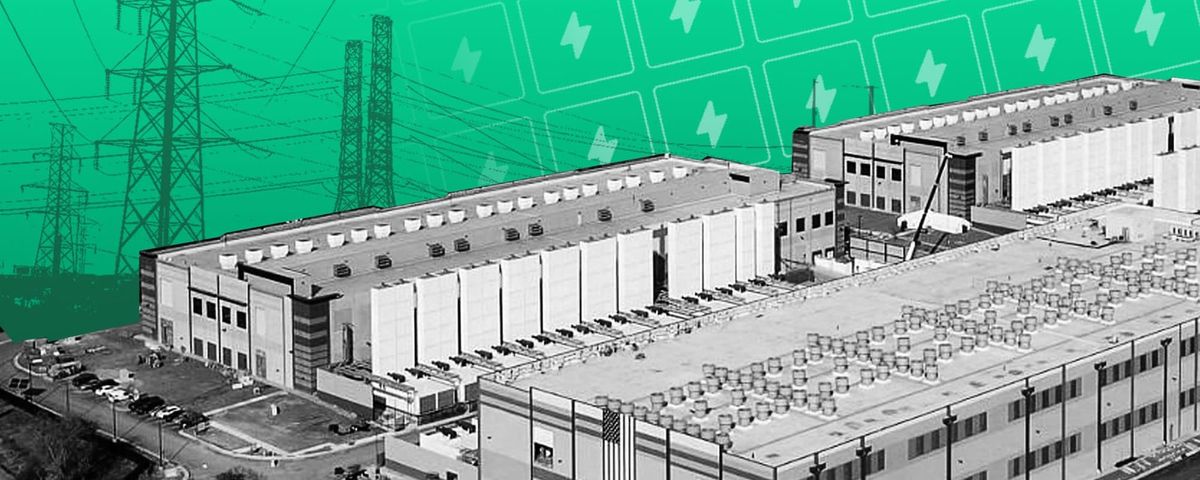
THE FARMLAND outside New Albany, Ohio, is disappearing under a layer of steel and concrete that has nothing to do with agriculture. Three natural gas power plants are under construction within a few miles of one another, collectively housing more than 100 engines, turbines, and generators — the kind of equipment typically found in remote oil fields, not suburban townships. Their sole purpose: feeding electricity to data centers that cannot wait for the grid to catch up with artificial intelligence.
The numbers are startling. By the end of 2025, roughly 39 percent of all gas-fired power capacity under development in the United States was designed to serve data centers directly, bypassing the public grid entirely, according to the Global Energy Monitor. A year earlier, that figure was 5 percent. Cleanview, a market intelligence firm, has identified 46 data center projects planning to generate their own power behind the meter, representing a combined 56 gigawatts — enough to rival the total electricity consumption of a mid-sized European country. The largest single project, GW Ranch in West Texas, will consume as much power as Chicago.
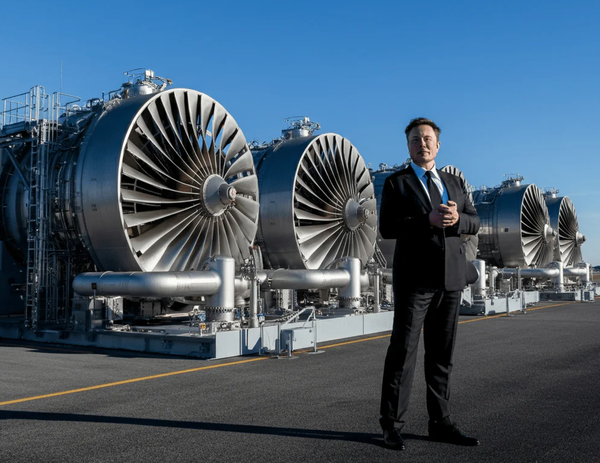
The logic is brutally simple. It now takes an average of four years or more for a data center to connect to the U.S. grid, according to JLL, and the hyperscalers building the infrastructure for AI's next generation have no intention of waiting. Elon Musk's xAI set the template in 2024, rolling gas turbines into Memphis on flatbed trucks to power what briefly became the world's largest AI training facility — an approach that drew a Clean Air Act complaint from the Southern Environmental Law Center but also drew imitators across the industry. Where grid queues are measured in years, natural gas generators can be installed in months.
Power plays
But speed has a price — several prices, in fact. Off-grid power is significantly more expensive than its grid-connected equivalent. Investment bank Jefferies estimates that Meta is paying Williams Companies, the Oklahoma pipeline operator building two gas plants for its New Albany data centers, between $140 and $160 per megawatt-hour — a hefty premium over typical wholesale electricity prices. Williams's chief executive, Chad Zamarin, was admirably blunt about the arrangement: the company gets paid whether Meta uses the power or not, for at least a decade. The inefficiency compounds. Smaller gas engines and turbines burn more fuel per unit of electricity than the large combined-cycle plants that anchor the existing grid, and analysis by the Environmental Defense Fund found that New Albany's new plants will produce more nitrogen oxides per megawatt-hour than Ohio's conventional gas fleet — even accounting for the emissions controls developers have pledged to install.
This article is for Vector members. Start a 7-day free trial to keep reading.
Start your free trial