CATL closes the loop on AI compute
Zhongheng Electric, VNET Group, and now DeepSeek — three deals since April reveal a single strategy
Three deals, six weeks, one strategy. Since early April, Contemporary Amperex Technology — better known by its acronym CATL, and best known as the world's largest maker of electric-vehicle batteries — has taken a $600m indirect stake in Zhongheng Electric, a Chinese supplier of data-center power-conversion gear; agreed a $942m deal for a 38% slice of VNET Group, the Nasdaq-listed Chinese data-center operator; and, according to two people briefed on the matter, signed up to invest in DeepSeek, the Hangzhou-based AI lab whose first external funding round, targeting $7.35bn at a $51bn valuation, could close as soon as next month. The three transactions read as distinct headlines; read together, they are a single move.

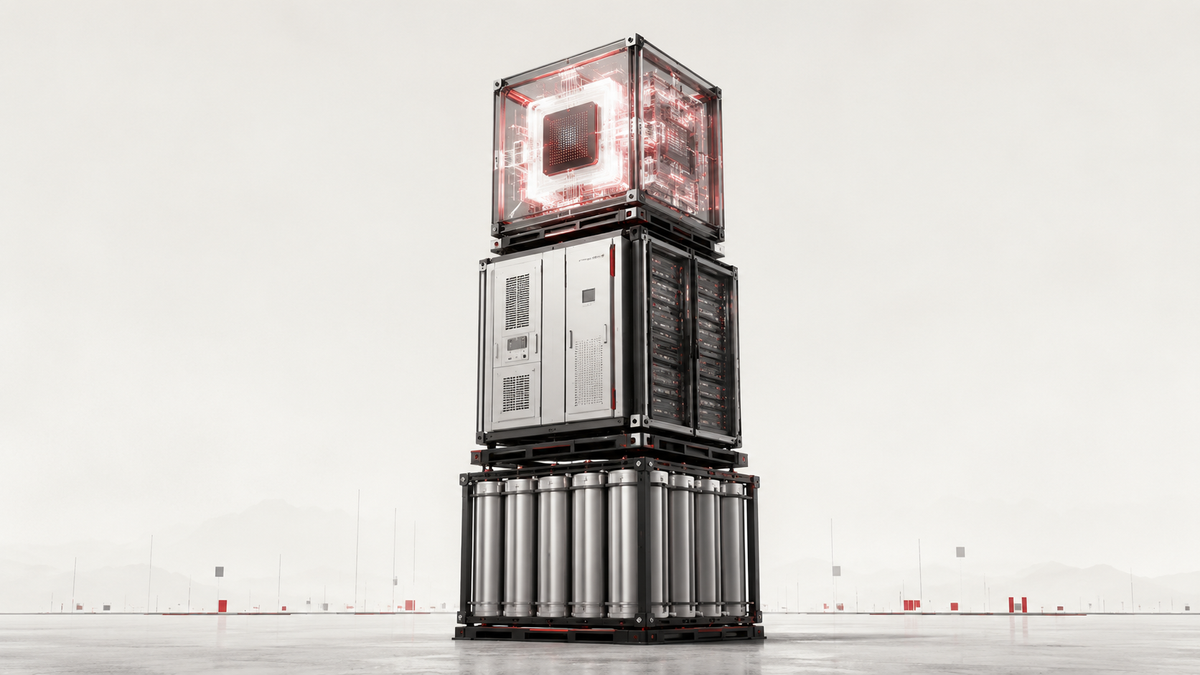
What CATL is assembling is a vertically integrated position across the AI energy stack: the equipment that conditions power inside the data center, the operator that runs the data center, and now the AI lab that fills the data center with workloads. Each deal supplies the next — the Zhongheng stake gives CATL an interface into power-conversion gear, the VNET stake gives it a captive customer for that gear at scale, and the DeepSeek stake aligns it with the AI lab whose own compute expansion — DeepSeek is hiring data-center engineers in Inner Mongolia — will require both the gear and the operator. The flywheel is unmistakable.
Watts and workloads
The strategy is no luxury — CATL's core business is maturing faster than its growth narrative permits. In 2025 the company shipped 541 GWh of EV batteries and 121 GWh of energy-storage batteries; the EV figure remains lopsided in its favor — CATL held 40.7% of the global battery market in Q1 2026, up from 38.5% a year earlier — but the storage business grew only 29% against an overall market that expanded by 79%. BYD and EVE Energy, two of CATL's main domestic battery rivals, are scaling aggressively in storage, and CATL's share is eroding in the segment that was supposed to absorb the cooling EV cycle. The data-center pivot is, in part, a hedge against being out-grown in commodity storage.
This article is for Vector members. Start a 7-day free trial to keep reading.
Start your free trial