Can the U.S. catch up to China in energy?
American hyperscalers will spend $690 billion on capex this year. The binding constraint is fifteen years old and immune to money.
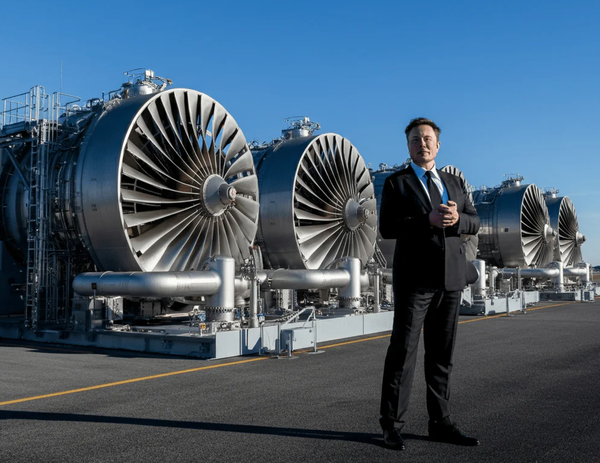
SATYA NADELLA told a podcast audience earlier this year that Microsoft has finished worrying about GPUs. "The biggest issue we are now having is not a compute glut, but it's power," the Microsoft chief executive said. Earlier this month, Chevron confirmed it was in talks to build a dedicated natural-gas plant in Texas to run a Microsoft data centre directly, bypassing the public grid entirely. Nadella's diagnosis is now industry consensus. The interesting question is why it took this long.
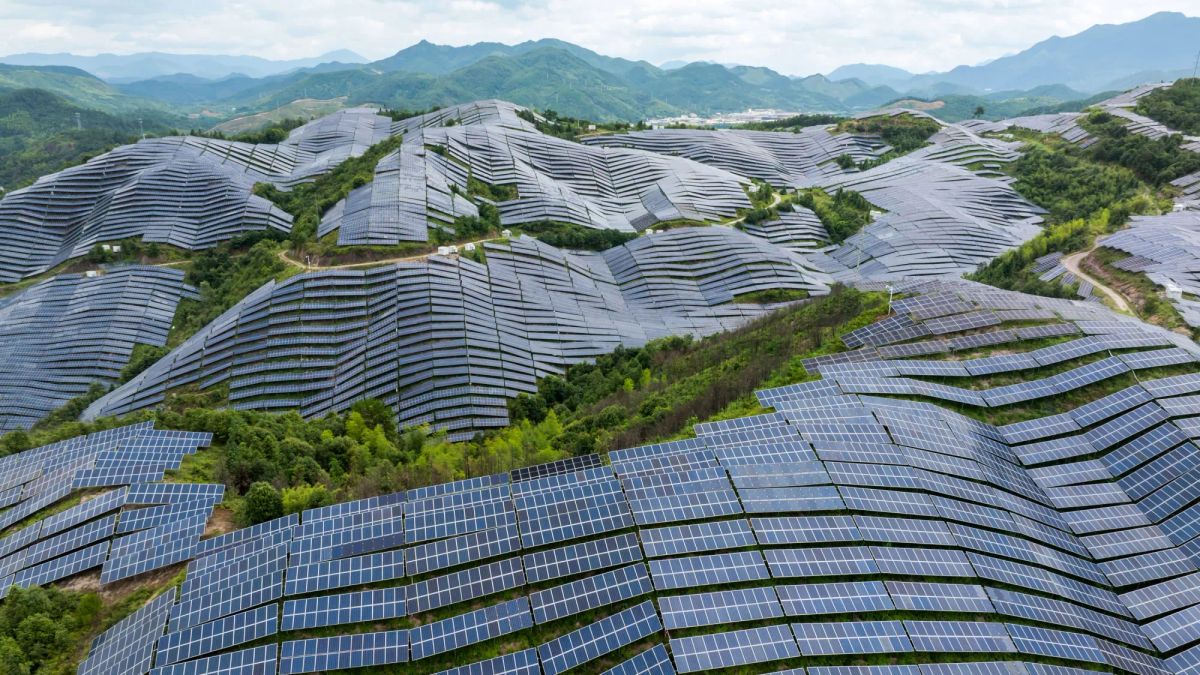
Amazon expects to spend $200 billion on capital expenditure this year, Google roughly $180 billion, Microsoft north of $120 billion, Meta as much as $135 billion and Oracle $50 billion. The Big Five's combined bill is about $690 billion — nearly double last year — and roughly three-quarters of it is earmarked for AI infrastructure. American hyperscalers now outspend the entire United States electric utility industry by roughly two to one. And yet the binding constraint is not capital. In 2024, China added 429 gigawatts of new power generation capacity; the United States added 51. China now generates roughly 10,000 terawatt-hours of electricity a year, more than the United States, European Union and India combined — a gap that has widened steadily since 2005 and has nothing to do with anyone's training run.
Grid expectations
The electron gap — the phrase OpenAI coined last October and which has since entered the Washington vocabulary — is not an artifact of the AI boom. It is the accumulated consequence of a fifteen-year divergence nobody in Silicon Valley thought was relevant until GPUs made it impossible to ignore. China surpassed the United States in total electricity generation in 2011 — the same year Siri shipped on the iPhone 4S and "cloud" still meant AWS. By 2024, Chinese output was more than double the American figure, and the gap had nothing to do with data centres. It had everything to do with how the two countries treat electrons: China as infrastructure, financed and directed by the state; America as a commodity, priced through markets and litigated through permitting processes that routinely run a decade. One country builds physical capacity. The other optimizes the old stock. One prints low-cost state credit for grid operators; the other asks ratepayers to foot the bill and rewards utilities for not missing their quarterly return on equity.

Yet the political framing now settling over Washington — an electron gap that federal policy is asked to close — flatters a particular telling of the story. In that telling, the AI industry is the innocent victim of legacy American energy policy. In fact, the gap was wide open long before hyperscalers noticed it. Goldman Sachs reckons American data centres already face an 11 gigawatt shortfall, with the cumulative deficit widening to 40 gigawatts by 2028; interconnection queues for new generation run to eight years in some regions, and federal transmission permitting routinely takes four more. Jim Robb, who runs the North American Electric Reliability Corporation, has taken to calling the next few years "a white-knuckle ride." None of this explains itself with reference to a training run. GE Vernova's gas turbine orderbook now runs 80 gigawatts deep and stretches into 2029, which is another way of saying the machines required to close the gap physically cannot be built in time even if someone wrote the cheque tomorrow.
This article is for Vector members. Start a 7-day free trial to keep reading.
Start your free trial