Huawei is losing China's AI labs
DeepSeek leaned hardest into Huawei's chips, and it is now designing its own to move off them
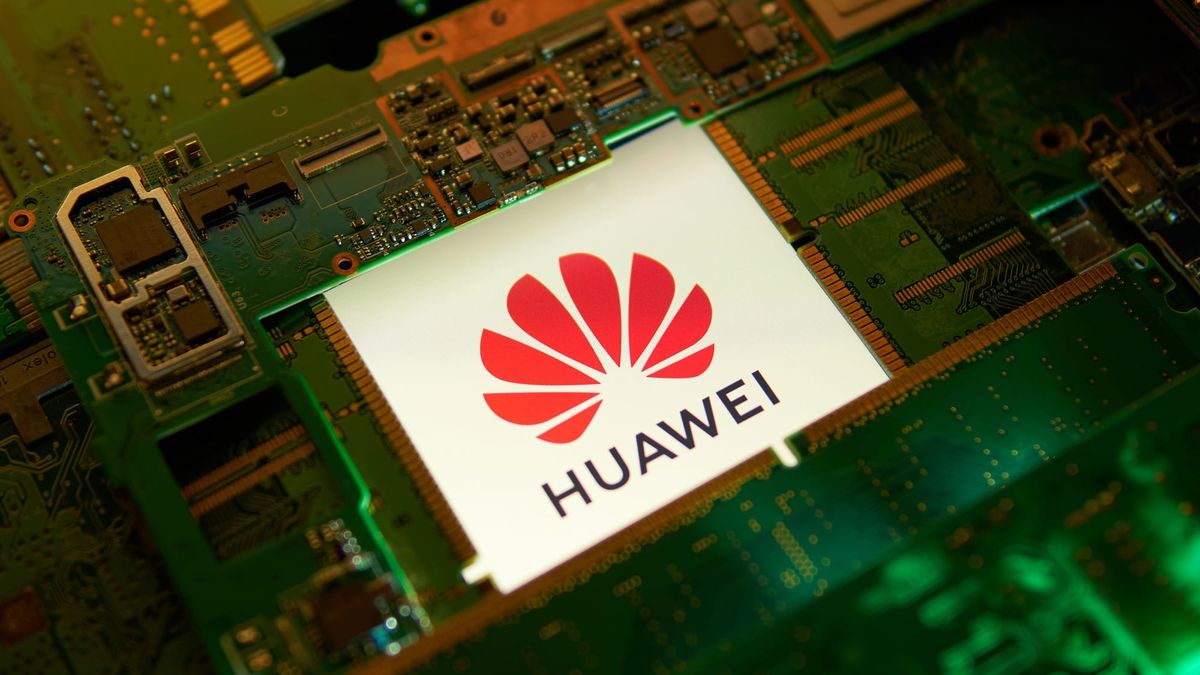
DeepSeek is designing its own AI chip. Three people briefed on the project told Reuters this week that the Chinese lab, whose cut-price models rattled American markets in early 2025, has spent about a year building an inference processor, the kind that runs a trained model rather than trains it, to cut its dependence on two suppliers. One is Nvidia, the American chipmaker China's labs have been barred from buying at the frontier since Washington's export controls began biting in 2023. The other is Huawei.
That second name is the story. Huawei is the company Beijing has spent two years elevating into a national champion, the designated answer to the Nvidia embargo, the chip every patriotic Chinese buyer is nudged toward. Its Ascend accelerators hold roughly half of China's $50-billion domestic AI-chip market, and a government procurement list circulated to ministries and state firms names Huawei and Cambricon, another domestic designer, as approved suppliers while pointedly omitting Nvidia. DeepSeek, of all customers, had leaned in hardest: it gave Huawei's engineers early access to its latest model, V4, to tune it for Ascend silicon, a courtesy it denied American chipmakers. If DeepSeek is now designing its way off Huawei too, the lab Beijing would most like to hold up as proof the domestic stack works is quietly betting it does not.
Ascendancy

It is not alone in that bet. Alibaba and Baidu, the two Chinese cloud giants, are both designing their own AI chips and taking market share from Huawei as they go. Cambricon, the closest thing China has to a merchant AI-chip vendor, is targeting half a million accelerators this year, with ByteDance already its largest customer. Zhipu, the Tsinghua-born lab that became the first listed large-language-model company in January, trains across a spread of domestic silicon, Huawei's Ascend among them but also Cambricon, Moore Threads, and Kunlunxin. The pattern is the inverse of the one Beijing drew up. The plan was consolidation behind a flagship; what is emerging is every major lab and cloud hedging across its own silicon and everyone else's.
This is a familiar Chinese industrial-policy pattern running in reverse. In solar panels, high-speed rail, and electric vehicles, the state picked winners, flooded them with subsidized capital, and let a chosen few consolidate a fragmented field into world-beating scale. The AI-chip version has the subsidies and the anointed champion; what it lacks is the labs' cooperation. A solar-panel maker had no reason to build its own glass. An AI lab has every reason to build its own chip, because the model and the silicon that runs it are collapsing into a single optimization problem, and whoever controls both controls their own cost curve. Self-reliance, pushed down to the level of the individual lab, stops looking like national strategy and starts looking like fragmentation.
Fragmentation is a luxury China can afford less than America can. When Google, Meta, and OpenAI each commissioned their own accelerators, they sent the designs to TSMC, the Taiwanese foundry that prints chips for everyone and can build more lines to print more. China's designers have no such outlet. Barred from TSMC's leading edge, they all funnel into SMIC, the mainland's most advanced foundry, which already runs at around 96% utilization and cannot buy the extreme-ultraviolet lithography tools that would let it expand. The high-bandwidth memory these chips need still comes largely from South Korea's SK Hynix and Samsung. Every additional lab that designs its own accelerator is one more claimant on a fab that cannot grow and a memory supply China does not control. In America, everyone building their own chip is a Broadcom and TSMC revenue event. In China, it is a scramble for the same fixed set of slots.
There is a further irony beneath DeepSeek's move: the chip it is designing runs models, it does not train them. Frontier training, the compute-hungry stage where cluster reliability and mature software matter most, remains the part Chinese silicon has struggled to take on. DeepSeek reportedly could not complete a single training run for an earlier model on Huawei's chips even with Huawei engineers on site, and the working consensus is that Huawei has won credible inference workloads without displacing Nvidia for training. A domestic inference chip is real progress and a real hedge. It is not independence. "Nvidia is at zero in China and staying there," Richard Windsor of Radio Free Mobile, a research firm, said of the export ban. The harder fact for Beijing is that Huawei is not yet at one.
Beijing set out to answer Nvidia with a single champion and produced a crowd instead: a dozen labs and clouds each designing silicon to escape the last supplier, all converging on the one fab that cannot serve them at once. Self-reliance was supposed to be the country's advantage. It is turning into its bottleneck.