Robinhood wants to own agentic trading
Customers can route trades through Claude or Cursor today — a trading rail Schwab and Fidelity haven't built
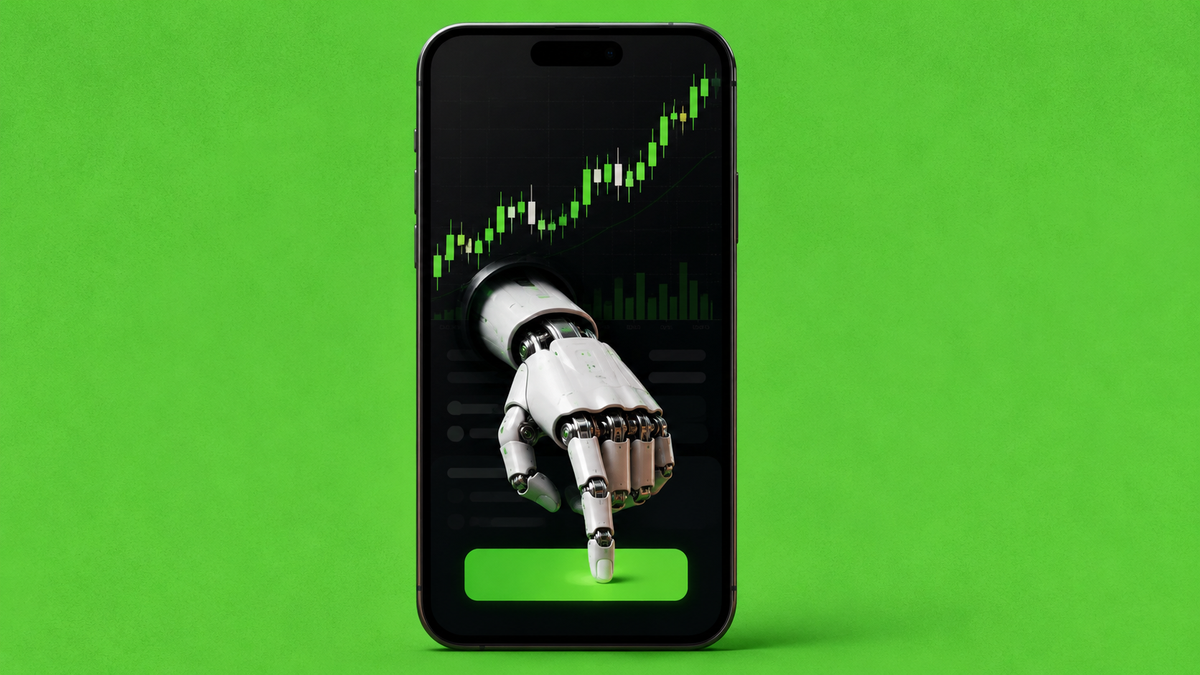
THE EXAMPLE PROMPT, when Robinhood showed it to a Wall Street Journal reporter on Wednesday, instructed an AI agent to take $100 and "sift through startup funding, deal activity and private-company valuations to identify places where private-market investors are putting their money before they have been discovered by the public markets." Connected via Model Context Protocol — the open standard Anthropic published in late 2024 — the agent would then place the trades against a segregated investment account, with the customer receiving a push notification each time.
Read past the prompt and the feature framing recedes. What Robinhood announced is something rather larger. Vlad Tenev, the company's chief executive, said in a statement that Robinhood's mission of democratizing finance "now extends to AI agents" — a phrase that, taken at face value, is the announcement. Robinhood is volunteering to be the consumer financial rail for AI agents, a category that does not yet have a settled winner and that may, within the year, be the largest infrastructure prize in fintech. The brokerage is making itself an API; the agents are the new customer.
Order flow
Start with what is missing from the agent stack. In the past nine months Stripe, the payments company, has shipped an Agentic Commerce Suite, an Agentic Commerce Protocol, and a primitive it calls Shared Payment Tokens — the plumbing that lets a model make a purchase from a merchant without exposing the underlying card. Visa and Mastercard, the card networks, have responded with Intelligent Commerce and Agent Pay respectively, each pitched as the authentication and tokenization layer beneath those flows. Google and OpenAI maintain rival commerce protocols of their own; a fragmenting standards war is well under way. The fight, until this week, was for the rail through which an agent buys things. Nobody had volunteered to build the rail through which an agent buys stocks.
That, in plain reading, is what Robinhood's announcement names. The dedicated investment account is the segregated container. The push-notification and disconnect controls are the consent surface. The permission scopes — equities now, with options, crypto and prediction-market "event contracts" promised later, the executives confirmed — are the asset axis. Read against Stripe's Issuing-for-agents launch and Visa's Intelligent Commerce Connect, the architecture is recognizable. It is the same stack, applied to a different asset class.
Take, second, the product implication. Robinhood spent a decade building a consumer app whose competitive advantage was friction reduction — zero-commission trades, fractional shares, the dopamine confetti that became briefly infamous in the GameStop episode of 2021. None of that matters to a model. The relevant artifact for an LLM is the API contract: permissioned scopes, deterministic execution, auditable trade logs, the real-time activity feed the model itself can read. Building a brokerage that ranks well on those criteria is closer to a B2B infrastructure product than a consumer one. Abhishek Fatehpuria, Robinhood's vice president of product management, told the Journal that customers wanted to give their agents "the power of Robinhood, but in a very safe way." The political framing is necessary; the underlying move is a product reorientation.
Consider, third, who has just been cut out. The retail wealth-management industry has spent the past decade defending itself against zero-commission brokerage and the robo-advisors that came before it. The threat that actually arrived was upstream of both. When the customer's question — what should I buy? — is answered by an LLM before the brokerage is ever opened, the brokerage becomes execution and nothing else. Charles Schwab, the $11.9 trillion brokerage giant, told analysts in April that it would introduce its first client-facing AI assistants in June, with "strict guardrails" and explicit handoffs to human agents. Fidelity's developer API access remains largely institutional. Both firms are responding to the agent question with chat-and-disclaimer products. Robinhood is responding by handing the agents the wheel.
Note, fourth, what is being permissioned. Stocks today; options, crypto and event contracts later, the company said. In parallel, customers can connect an agent to a virtual version of the Robinhood Gold credit card — same architecture, applied to consumption. The two announcements, read together, claim the consumer agent rail for both capital allocation and consumer spending. Robinhood Markets ended the first quarter with $307bn in total platform assets, 27.4 million funded customers, and a Gold subscriber base that grew 36% year on year to 4.3 million. The user base, in other words, is large enough that incumbency in the agent surface is a strategic position rather than a marketing one.
The four moves are convergent. The missing layer, the API turn, the disintermediation, the asset axis — each names the same structural fact from a different angle. Brokerage, in Robinhood's version, becomes the surface AI agents trade through. The category claim is the announcement; the feature is incidental.
Whether the prompt the company demonstrated — the agent that hunts for private-market plays "before they have been discovered by the public markets" — represents prudent retail investing is a separate question for someone else's article. Robinhood, in any case, is selling the rail underneath it.