The AI boom runs on gas
Hyperscalers have announced over 20 gigawatts of nuclear capacity for AI data centers, and almost none of it arrives before 2030
IN THE PAST YEAR, every large American technology company has announced a nuclear deal. Microsoft is reopening the Three Mile Island reactor, closed since a partial meltdown in 1979. Google has signed up for a fleet of small modular reactors from a startup called Kairos Power. Amazon has taken a stake in a reactor company and bought a data-center campus next to an existing nuclear plant. Meta, not to be outdone, has committed to buying power from a dormant Illinois reactor and placed orders for several more reactors that do not yet exist. All of the press releases use the same phrase: carbon-free.
There is a detail buried beneath the announcements. Almost none of this nuclear power will be flowing to data centers before 2030.
The restarts of existing plants are the quick wins; Three Mile Island and the Illinois reactor are targeted to begin supplying their tech-company buyers in 2028 and 2027 respectively. Everything else is further out. The small modular reactors (essentially factory-built, miniature versions of traditional reactors) are a genuinely new class of machine, and building new things in the American nuclear industry is famously slow. Google's first Kairos unit is scheduled for 2030. Meta's newer reactors target 2032 at the ambitious end. Industry analysts at Omdia and CBRE reckon that widespread deployment is unlikely before the middle of the 2030s.
The trouble is that AI does not wait until 2032 to need power. It needs power this year, next year, and the year after. The computing demands of training and running modern AI models have already roughly doubled American data-center electricity use in the past two years, and are set to double it again before the decade is out. The hyperscalers — the industry term for the companies running the largest data centers — are asking the grid for more new capacity than America has added in the past twenty years combined.
Pedal to the methane

But the data centers are being built anyway. And the power keeping them running is not nuclear. It is gas.
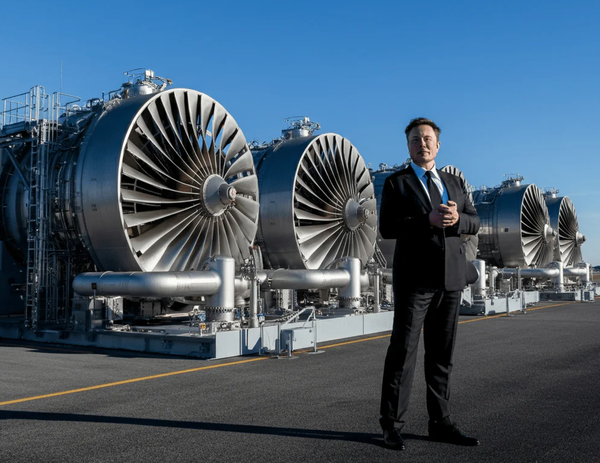
A quiet but enormous construction boom is under way in American natural-gas plants, the largest since the early 2000s. Texas alone is adding more gas capacity than the next seven states combined, with roughly half of it hardwired to serve data centers directly. Meta's largest new facility, in rural Louisiana, will run on three industrial gas turbines. Elon Musk's xAI supercomputer in Memphis has ordered dozens more. Oracle's Stargate project with OpenAI, in west Texas, is being powered by gas and fuel cells. Chevron and GE Vernova are putting up a four-gigawatt gas plant in the Permian Basin specifically to sell electricity to data centers.
This article is for Vector members. Start a 7-day free trial to keep reading.
Start your free trial