The autonomy bet actually making money
While robotaxi and humanoid startups burn billions, Gatik's backers wanted the slice with signed contracts
On August 25th Gatik, an autonomous-trucking firm in Santa Clara, closed the largest round in its history — $200m — led by two investors that rarely sit atop a venture deal.
One was the Qatar Investment Authority, a sovereign fund managing several hundred billion dollars of a petrostate's surplus. The other was Koch Disruptive Technologies, the investment arm of Koch Industries, one of the largest private industrial conglomerates in America. Millennium Management, ARK Invest and Intact Private Capital filled out the round, which brings Gatik's total to about $500m since it left stealth in 2019. The company declined to disclose a valuation.
Neither lead is a venture firm in the ordinary sense, and neither is in the habit of underwriting the decade-long, all-or-nothing bet that "autonomous vehicles" has come to imply. Koch Disruptive Technologies describes its mandate as backing companies that solve "foundational infrastructure challenges"; in practice it favors growth-stage businesses with real revenue and a legible path to profit, writing checks of $50m to $500m against a parent that clears around $130 billion a year and imposes no fund-lifecycle clock forcing a sale. It has been quietly assembling a book of bounded-autonomy bets — Gatik in the middle mile, Outrider in the freight yard — the geofenced corners of self-driving the robotaxi story tends to skip. QIA allocates a nation's savings across generations. Both price an asset on the cash it produces, not on the size of the narrative attached to it.
Freight expectations

The marquee money in autonomy has spent two years going the other way. In February Waymo, Alphabet's robotaxi unit, raised $16 billion in a single round at a $126 billion valuation. Figure, a humanoid-robot company founded in 2022 that has yet to sell anything at scale, carries a $39 billion valuation on close to $2 billion raised. Both are bets on frontier optionality — that a general-purpose driving brain, or a general-purpose robot body, eventually opens an enormous market once the last and hardest problems yield. The market is vast because the problem is unbounded.
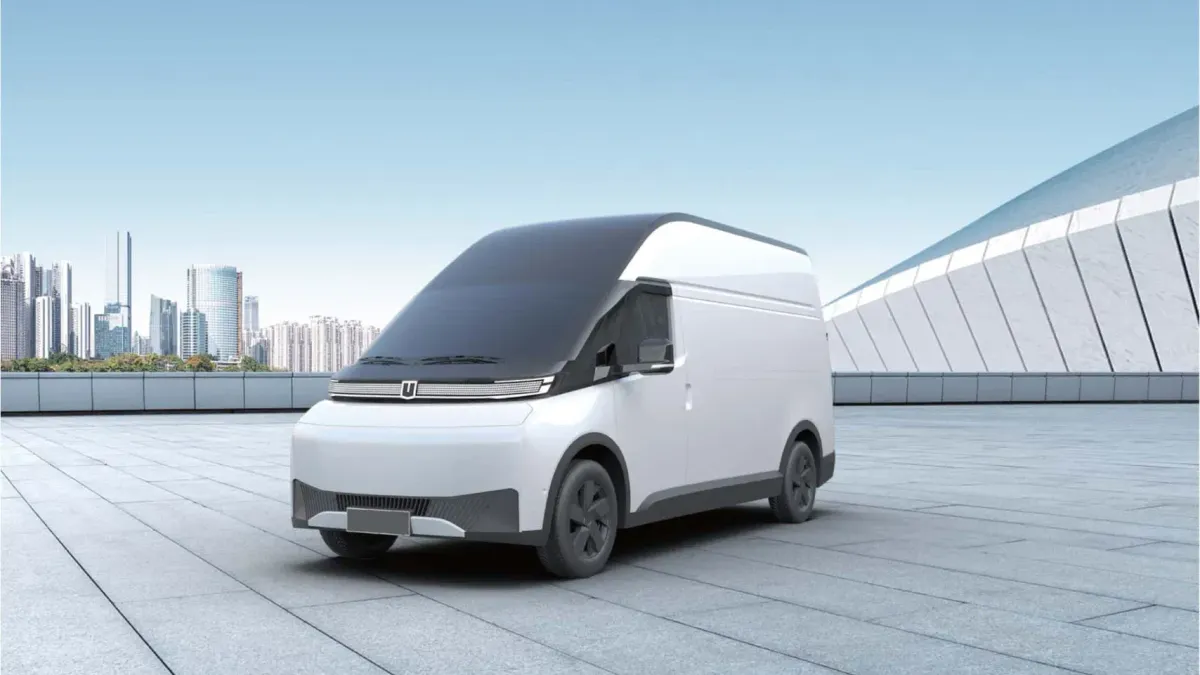
Gatik solves a smaller problem on purpose. Its trucks — Isuzu box trucks fitted with a system it calls the Gatik Driver — run the middle mile: fixed, repeated routes between a retailer's distribution center and its stores, the same roads at the same hours, day after day. Walmart was the first customer, in 2019; PepsiCo, Kroger and Tyson followed, and in June the company signed its largest deployment yet, forty-one driverless trucks moving Frito-Lay goods around Dallas, Phoenix and northwest Arkansas. The routes are dull, and their dullness is the whole commercial proposition, because a fixed route bounds the safety case. The vehicle is not asked to handle every street in a dense city with pedestrians and school zones, only a known corridor it will drive thousands of times. A problem small enough to be finished is a problem that can be sold on a contract.
That contract is what the two investors are paying for.
Look at a single ratio. Gatik reports more than $600m in contracted revenue — freight its customers have committed to, booked as backlog rather than banked as cash — against the roughly $500m it has raised in its entire life. It has sold more driving than it has spent raising the money to build. In autonomy that inversion is close to unique. Waymo, on figures reported by the Financial Times, runs perhaps $350m of annualized revenue against that $126 billion valuation; Figure has next to none. Across the frontier of the field, capital leads revenue by one or two orders of magnitude, on the faith that the revenue arrives later and larger. Gatik runs the ratio backwards — and it is the ratio, not the sensor stack, that a sovereign fund and an industrial conglomerate recognize as their own kind of asset.
This is what "financeable" means once capital turns selective. A robotaxi network is underwritten on a projection: solve general driving, and a trillion-dollar mobility market opens. A middle-mile lane is underwritten on a contract: a named retailer commits to a route at a price, the truck runs it, the revenue recognizes. The first is a wager on optionality, the kind venture capital exists to make and the kind that needs a decade of patient losses to clear. The second is a wager on an operating business, the kind an infrastructure investor models the way it models a toll road or a pipeline. When the marginal dollar in autonomy turns cautious — as it has, the easy money of 2021 long spent — it moves toward the second and away from the first. Gatik's round is that movement made visible.
The read has a soft spot, and it is better named than buried. The middle mile is a smaller prize than the robotaxi bulls are chasing; no one builds a $126 billion company hauling Frito-Lay between a warehouse and a Walmart. Contracted revenue is backlog, not cash, and backlog can slip. And Gatik does not intend to stay a toll road — it wants to grow from dozens of trucks to thousands, and every increment of that expansion reintroduces the scaling, weather and edge-case risk the fixed-route discipline was meant to retire. In Canada its trucks still run with a safety driver aboard. The company is selling underwritable predictability today to raise money for something less predictable tomorrow, and the strain between those two stories is real.
The allocator has weighed it anyway. Offered a menu that runs from a general robot body priced at $39 billion on no revenue to a geofenced freight lane priced on a signed contract, the most disciplined capital in the room took the freight lane — not for want of imagination, but because a slice of autonomy can now be underwritten the way these investors underwrite everything else, on the cash rather than the story. The trillion-dollar outcomes are still out on the frontier. The careful money has moved to where it can be paid on a contract.