
The best drone killer in the world exists — the Pentagon won't buy it
Epirus's Leonidas can down 49 drones with one pulse. The Army only owns four of them
THE FIRST AMERICAN combat deaths of the Iran war came not from a ballistic missile or a fighter jet but from a Shahed-136 drone — an Iranian weapon that costs somewhere between $20,000 and $50,000 to produce. On March 1st, one struck a temporary operations center at the Port of Shuaiba in Kuwait, killing four Army Reserve soldiers and wounding dozens more. Three weeks into Operation Epic Fury, roughly 200 U.S. troops have been wounded, the majority by drone strikes, according to CENTCOM.
Iran has launched more than 2,000 one-way attack drones and 500 ballistic missiles since February 28th, hitting targets from Dubai International Airport to Saudi Aramco's Ras Tanura facility to the American consulate in Dubai, which was set ablaze by a Shahed. On Wednesday, Iranian missiles struck Qatar's Ras Laffan Industrial City — the world's largest LNG export facility, responsible for roughly 20% of global supply — causing extensive damage and fires that QatarEnergy now says could take years to repair. Qatar expelled Iran's military attachés within hours. Brent crude surged past $111. The drone threat, in other words, is no longer merely a battlefield problem; it is an energy-market crisis, a diplomatic accelerant, and — as of this week — a homeland-security question. On Wednesday night, the Washington Post reported that unidentified drones had been detected over Fort McNair, the Washington Army base where Secretary of State Marco Rubio and Defense Secretary Pete Hegseth reside, prompting a White House meeting and discussions about relocating both officials. No one has determined where the drones came from.
The Pentagon reckons it has degraded Iran's drone capacity by 83% since the war began. That still leaves a lot of drones in the air — and the chairman of the Joint Chiefs told Congress in a closed-door briefing this month that one-way drones were "posing a bigger problem than anticipated," and that U.S. air defenses could not intercept all of them.
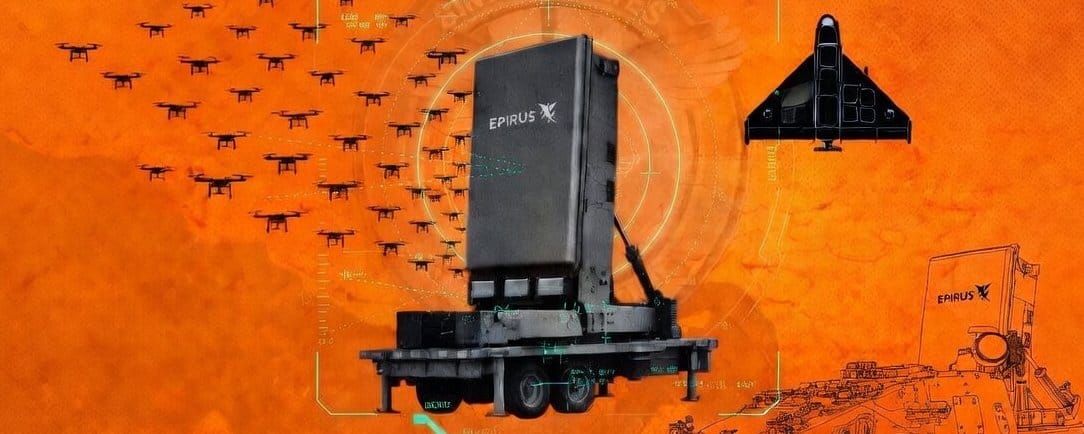
Somewhere in the CENTCOM theater — the Army will not say where, exactly — sit a handful of Epirus Leonidas systems, the U.S. military's only operational high-power microwave weapon purpose-built to down drone swarms. At a live demonstration at Camp Atterbury near Indianapolis last year, Leonidas disabled 49 drones simultaneously with a single electromagnetic burst, in front of observers from multiple military branches and allied nations. In January 2026, the company achieved what it calls a landmark: the first known defeat of fiber-optic-guided drones, the autonomous variety immune to conventional jamming that has become ubiquitous on the Ukrainian front and is now proliferating to state militaries globally. The technology, by most accounts, works. The problem is not the weapon. The problem is scale.
This article is for Vector members. Start a 7-day free trial to keep reading.
Start your free trial