To earn its multiple, Tesla must start to accept responsibility
Today Tesla's software keeps its drivers legally at fault, but autonomous robotaxis won't have the same legal shield to hide behind
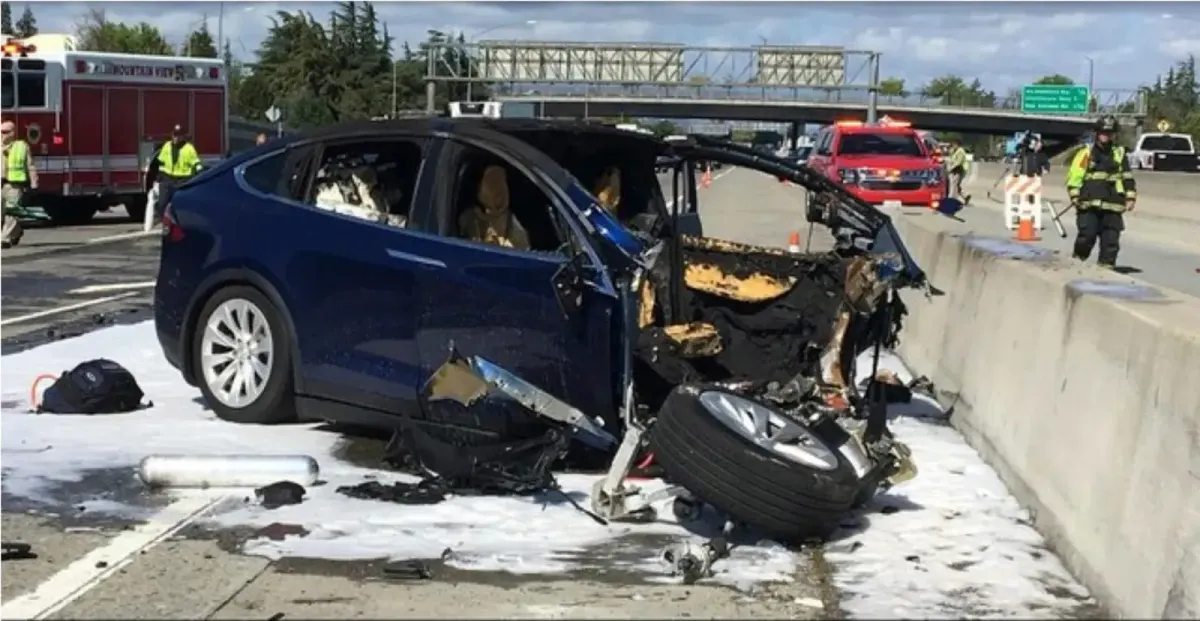
The statement landed on X within hours of the crash, before the sheriff's office had finished its scene work and before the federal regulator had opened its file. Ashok Elluswamy, Tesla's vice president of AI and software, wanted the record to show that the driver of the blue Model 3 that left a Katy, Texas road on Friday evening, crossed a yard and a driveway, and entered a brick house at speed had pressed the accelerator pedal himself — and had kept it pressed after the car was already inside the home, where it killed Martha Avila. The point of the post was not consolation. It was attribution. Whatever the car was doing, a human foot was on the pedal, and the human foot is the entire argument.
That argument is the most valuable piece of engineering Tesla has ever shipped, and it is not in the car. It is in the parentheses. The company's driver-assistance suite is sold as Full Self-Driving (Supervised), and the modifier inside the brackets does work that no amount of silicon can. It establishes that the system controls steering, acceleration, and braking while the person behind the wheel remains, at every instant and as a matter of law, the operator of the vehicle. The driver pays Tesla $99 a month for the software and retains, for free, all of the liability. Whichever way a crash resolves, the fault has somewhere to go, and the place it goes is the customer.
This article is for Vector members. Start a 7-day free trial to keep reading.
Start your free trial