To survive AI, Salesforce disappears its own app
Salesforce is moving its CRM inside Claude — a bet that its moat was always the data underneath, not the interface on top

For years Marc Benioff, Salesforce's co-founder and chief executive, wore a lapel pin with the word "software" crossed out. It was the founding gesture of the company he started in 1999: "No Software," the word itself inside a red circle with a slash, the slogan of a man who launched his product by staging a mock "hell" of shrink-wrapped CD-ROMs and a caged actor playing a trapped software salesman. The joke was that "No Software" never meant no software. It meant no software you had to install. The screen you reached through a browser instead — the tabs, the reports, the pipeline views — was the product, and for twenty-five years it was where a sales team lived.
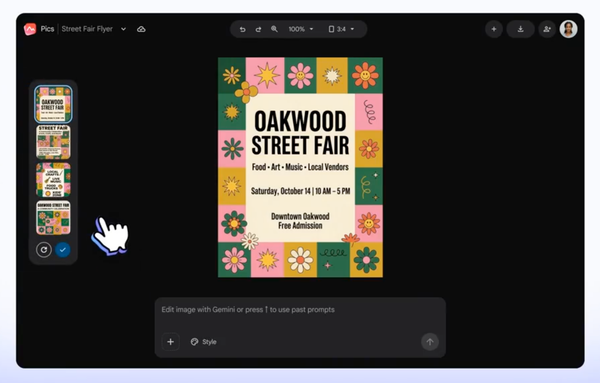
On August 26th Benioff went after that screen too. Salesforce and Anthropic, the AI lab behind the Claude model, announced a partnership called Claudeforce whose first product, Salesforce in Claude, lets a salesperson run a deal, update a pipeline, and prep a meeting without opening Salesforce at all — an administrator connects the two once, and every seller inherits the access on day one. "The UI is the AI," Benioff told analysts on that day's earnings call, and pronounced the "SaaSpocalypse" — the year-long worry that AI agents would hollow out seat-based software — finished. The stock, down about 22% on the year, rose 22% the day after, its best session in six years.
Strip the branding and the maneuver is a strange one for this company in particular: a firm that made its name abolishing one interface now volunteering to abolish its own. Salesforce in Claude runs on what the company calls AIforce, an enterprise "harness" that exposes its data, workflows, and business rules to any agent through open plumbing — MCP servers, APIs, command-line tools — so Claude can reason over an account and act on it while no human touches a Salesforce screen. Benioff's other coinage for this, delivered on the call, was "Headless 360." The interface is being conceded on purpose.
The disappearing act
The reason Salesforce can afford to lose the screen is that it owns everything under it. A customer-relationship-management system is, at bottom, a system of record — the authoritative store of who the customer is, what was promised, who is allowed to see it, and which actions are permitted. That store has already outlived a succession of interfaces: the desktop client, the browser tab, the mobile app. An agent is merely the next one. What Salesforce is monetizing in Claudeforce is not the window onto the data but the data, the permission graph, and the workflow logic that tells an agent what it may and may not do — "Enterprise Frontier Safeguards," in the joint branding, the governance layer Dario Amodei, Anthropic's chief executive, has said was the hard part of the build.
This is the part worth sitting with if you build software for a living. The lesson bifurcates, and which branch a company lands on has little to do with how good its product is. A company that owns a genuine system of record — proprietary data, an entitlements model, years of encoded process — can hand its interface to an agent and keep collecting the rent, because the agent has to call that system to do anything true. A company whose value was the interface — a well-designed workflow sitting on data that lives somewhere else — has just watched the incumbent narrate its obituary. When the agent becomes the surface, the well-built screen is a cost, not a moat. The uncomfortable question for a great many SaaS businesses is which of the two they are, and most have never had to answer it, because the screen was where they hid the answer.
Still, the slogan cuts both ways, and this is where the earnings-call celebration gets ahead of the structure. If the UI is the AI, then the interface every seller now lives inside belongs to Anthropic, not Salesforce. The reasoning that decides what to surface, the conversation the user actually has, the surface where the next feature — and the next habit — will form: all of it now happens in Claude. Salesforce keeps the rent on the data. It cedes the place where attention, and eventually the judgment about what the data means, accumulates. Owning the system of record is a durable position; it is also a back-end position, and back ends have a way of becoming interchangeable to the layer above them. Anthropic has every incentive to make Claude the harness for Workday and QuickBooks too, at which point Salesforce is one governed data source among many, reached through someone else's front door.
There is a tell in the very quarter the rally was built on. Salesforce holds an equity stake in Anthropic, and roughly $2.6bn of investment gains — tied in part to that position — flowed into its Q2 profits; by one analysis, nearly all of the earnings surprise traced to investment marks rather than the operating business. The incumbent, in other words, is now long its own disruption. Its best day in six years was underwritten, in part, by the rising value of the company to which it just handed its interface.
Benioff may be right that the SaaSpocalypse is over. The seat-based incumbents with real systems of record beneath them will likely survive the shift to agents, and some will grow through it. What he is quieter about is the trade that survival now demands. Salesforce keeps the data, the permissions, and the rent. It has given away the screen — and with it, the argument that the screen was ever the point.