
Trump's AI framework tells states to stand down
A seven-pillar framework that says more about what states can't do than what companies must
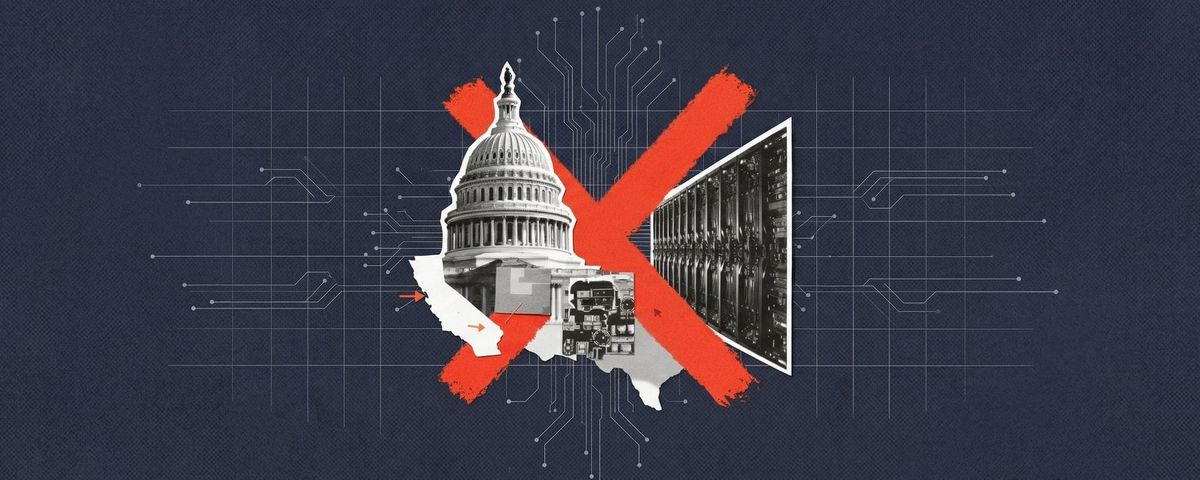
THE TRUMP ADMINISTRATION'S long-awaited blueprint for governing artificial intelligence, released on Friday, spans seven pillars, 2,000-odd words, and an unmistakable thesis: Washington should set the rules — and the rules should be few. The framework urges Congress to adopt a federally unified, innovation-oriented regime centered on preemption of state AI laws and a "light-touch" regulatory approach. It is the most detailed articulation yet of an administration that reckons the greater risk to American competitiveness is not too little regulation, but too much of it, in too many places.
The framework stems from an executive order Trump signed in December that blocked states from enforcing their own regulations around artificial intelligence. That order gave the Commerce Department ninety days to identify burdensome state laws — and directed the Attorney General to establish a litigation task force to challenge state AI statutes on grounds of unconstitutional regulation of interstate commerce. The legislative blueprint now arriving on Capitol Hill is, in effect, the policy complement to that legal offensive: a set of recommendations designed to give Congress something affirmative to pass while the DOJ works to tear down what states have already built. The timing is no coincidence. In 2025, more than 1,200 AI-related bills were introduced across all fifty states, with 145 enacted into law. Colorado, California, Texas, and Utah have all passed comprehensive AI statutes — covering everything from algorithmic discrimination and transparency requirements to frontier model safety disclosures. For an industry building general-purpose technology across state lines, the compliance surface was expanding fast.
Fifty shades of preemption
But the framework's most consequential section is not about what it proposes; it is about what it prohibits. The document calls on Congress to preempt state laws that regulate AI development outright, prevent states from penalizing AI developers for third-party misuse of their models, and bar states from burdening lawful AI-enabled activity. The carve-outs are narrow: states may still enforce generally applicable child-protection statutes, zoning laws for data center placement, and rules governing their own procurement. Everything else — the bias-mitigation mandates, the impact assessments, the transparency disclosures that make up the core of Colorado's AI Act and California's SB 53 — falls squarely within the federal preemption crosshairs.
This article is for Vector members. Start a 7-day free trial to keep reading.
Start your free trial