Why OpenAI can't enter the robot race
The firm's robotics arm cannot raise outside capital, which buys breathing room for Figure, Skild, and Physical Intelligence
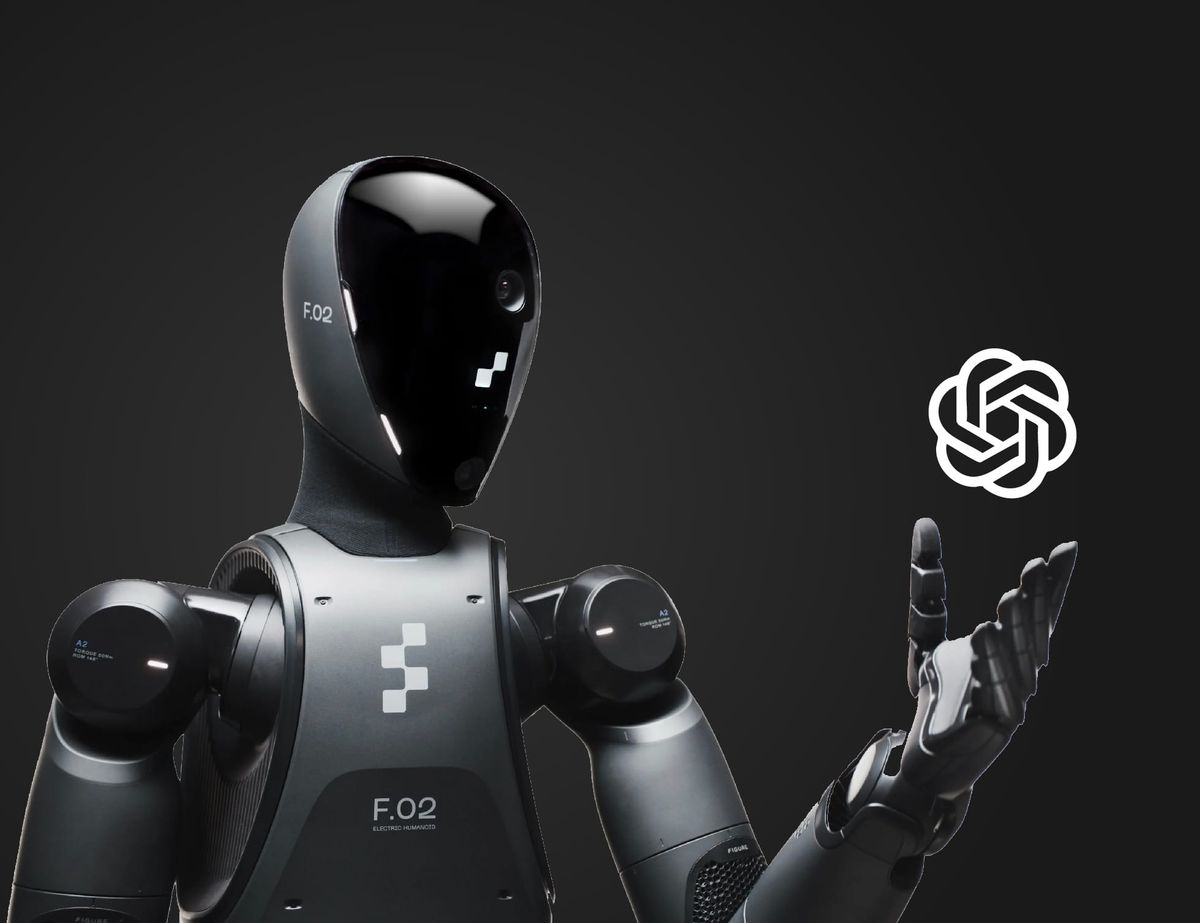
In late March, Bloomberg reported that Physical Intelligence, a two-year-old robotics startup whose only product is a foundation model still numbered in early 0.x versions, was in talks to raise around $1 billion at a valuation above $11 billion. The round would double the company's price in four months. Founders Fund was joining; Lightspeed Venture Partners was joining; Thrive Capital and Lux Capital were returning. Nobody flinched.
The detail worth holding onto is that nobody flinched. In any prior cycle, a pre-revenue startup doubling its valuation between rounds would have drawn at least a polite skeptical paragraph in the trade press. In 2026 humanoid robotics, it draws a queue of co-investors. Figure, the field's leader, closed a $1 billion Series C in September at a $39 billion post-money valuation, fifteen times where it stood nineteen months earlier. Skild AI, a robotics foundation-model company eight months younger than Physical Intelligence, raised close to $1.4 billion in January at a valuation above $14 billion. Apptronik, a Texas-based humanoid maker, extended its Series A by $520 million in February, bringing the round above $935 million. Bernt Børnich, the chief executive of 1X, an Oslo-based humanoid company backed by OpenAI's own startup fund, is now seeking $1 billion at a $10 billion valuation, twelve times the company's price early last year.

These are large numbers, and they are also the small numbers; the entire pure-play humanoid robotics sector raised $3.2 billion globally in 2025, more than the previous six years combined. Each of these rounds went into a market without an OpenAI-anchored humanoid competitor on the other side of it. That is the part nobody is pricing.
An accidental subsidy
Last week, the Wall Street Journal reported that Sam Altman, OpenAI's chief executive, had proposed spinning out the company's robotics and consumer-hardware divisions late last year, with the goal of letting them raise external capital and operate independently. The proposal was rejected. Among the reasons, according to people familiar with the matter: OpenAI concluded that the new entities might still have to be consolidated on its balance sheet. For a company racing toward an IPO and trying to clean up the picture investors will see, two new wholly-owned subsidiaries with their own losses to disclose was the wrong shape.
This article is for Vector members. Start a 7-day free trial to keep reading.
Start your free trial