Can Elon's Terafab actually work?
Building a 2nm fab from scratch takes billions, years, and expertise Musk doesn't have
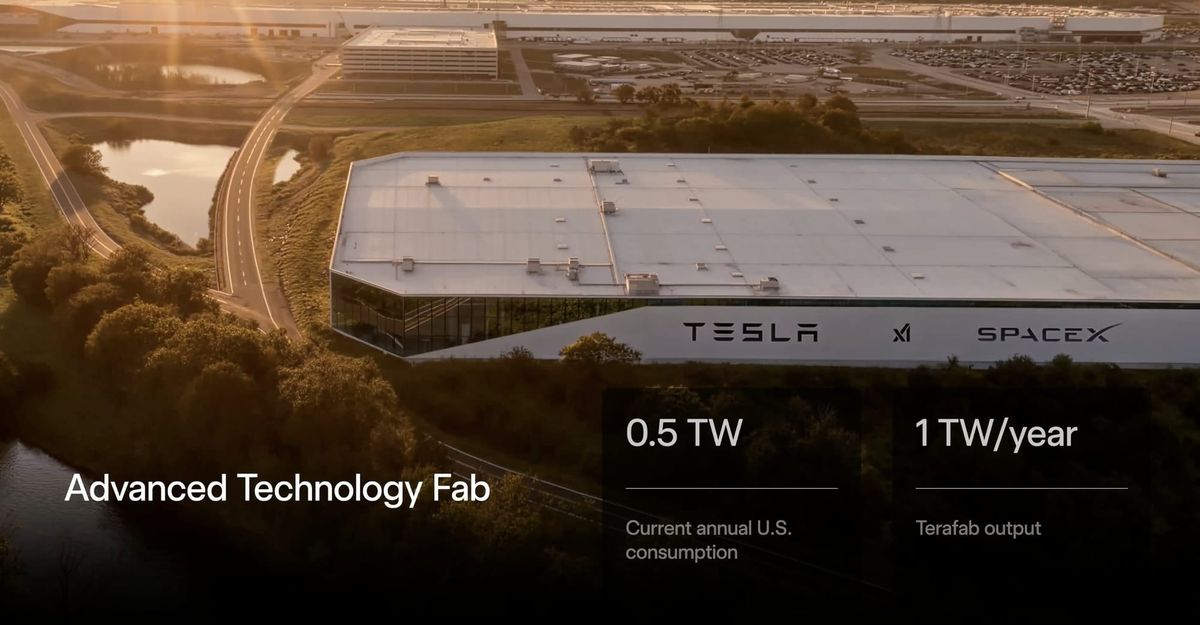
THE LAST TIME a tech mogul with no semiconductor experience announced plans to manufacture chips, it was — well, it has never quite happened like this. On Friday evening in downtown Austin, with Texas Governor Greg Abbott in the audience, Elon Musk unveiled "Terafab," a jointly operated Tesla-SpaceX project to design and fabricate chips for robotics, autonomous driving, AI inference, and orbital data centers. The facility, planned near Tesla's existing gigafactory headquarters, would eventually support a terawatt of annual computing power — a figure so large it borders on the unit of measurement you invent when the real ones stop sounding impressive enough.
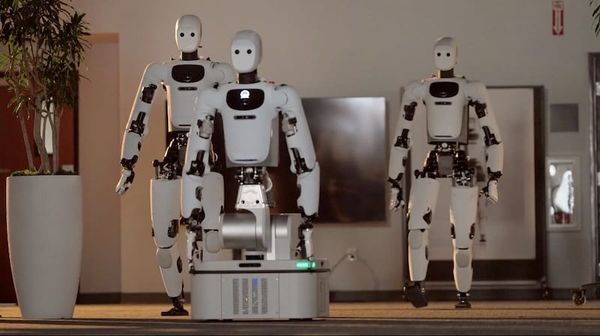
Musk offered some concrete details amid the grandeur. The fab will produce two chip variants: an edge-and-inference processor optimized for Tesla's vehicles, robotaxis, and Optimus humanoid robots, and a high-power chip designed for space applications, primarily serving xAI, which SpaceX acquired in February as a wholly owned subsidiary. Musk said the facility would target 2-nanometer process technology and begin as an "advanced technology fab" equipped to prototype and test before scaling. He cited interim capacity targets of 100 to 200 gigawatts of terrestrial computing power annually, with a terawatt aspiration for space — though he provided no timelines for either milestone. Tesla already has chip agreements with Samsung, TSMC, and Micron, none of which, Musk claims, can meet the company's expanding appetite as it pivots toward AI and robotics.
Fab-ulous ambitions
But the semiconductor industry has a way of humbling even well-capitalized entrants. Intel has spent decades and tens of billions of dollars maintaining its fabs; Samsung and TSMC have survived by treating manufacturing as a core competency refined over generations of process nodes. Building a leading-edge fab from scratch is not a software problem that yields to first-principles thinking and brute-force capital. Equipment lead times from ASML alone can stretch beyond 18 months. Recruiting the process engineers who know how to coax viable yields from 2-nanometer lithography is, if anything, harder than procuring the machines. Musk has no background in semiconductor production and — as Bloomberg noted with characteristic understatement — "a history of over-promising on goals and timelines."
This article is for Vector members. Start a 7-day free trial to keep reading.
Start your free trial