Memory leaves the cycle
Three memory chipmakers crossed $1 trillion in three weeks, and the comp that priced the business for thirty years no longer fits
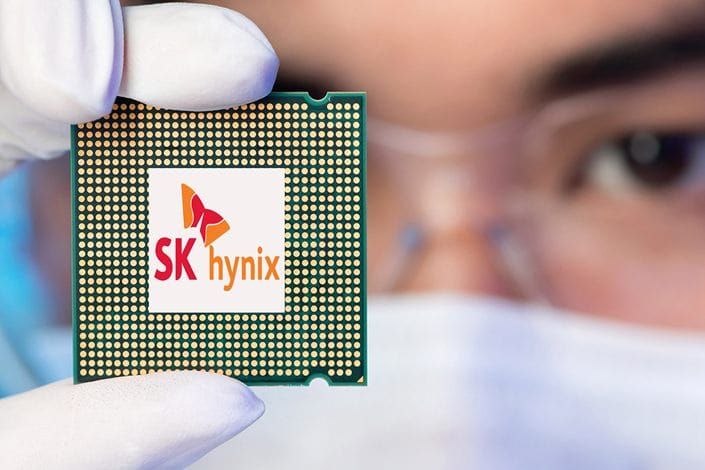
SK HYNIX, the South Korean memory-chip maker, crossed $1 trillion in market capitalization on Wednesday, rising nearly 10% in a single session to put the company twelfth on the global market-cap table. It was the third memory chipmaker to cross the threshold in twenty-one days. Samsung Electronics, the South Korean memory and electronics giant, did it on May 6th. Micron Technology, the American DRAM and NAND maker headquartered in Boise, did it on Tuesday. In any prior cycle, the cluster would have been read as a memory boom and waved past. In this one, something else is happening.
The chip behind the move is called HBM, short for high-bandwidth memory, and it is the component that sits stacked vertically next to every modern AI accelerator. Nvidia's H100, H200, and B200 GPUs ship with HBM stacks. The next-generation Rubin chips Nvidia previewed earlier this year require even more. If the GPU is the engine, HBM is the fuel line; without it, the GPU spends most of its time waiting for data. There are three companies in the world that can produce HBM at scale, and the entire 2026 production run, across all three, is already sold.
Four conditions which together make HBM scarce, namely capacity, contracts, mix, and reallocation, no longer look anything like the conditions that defined the memory business for the previous thirty years.
Stacked deck

Start with capacity. SK Hynix has reportedly locked in roughly 70% of initial HBM4 orders for Nvidia's Rubin platform, and the company has committed to spending roughly $75 billion on chip capex through 2028, with about 80% of that figure earmarked for HBM. In January it added a $12.85 billion advanced-packaging plant in Cheongju, dedicated to HBM, on top of the broader plan. Samsung is restructuring its yield process to catch up. Micron has shifted its Hiroshima and Taiwan capacity toward HBM and away from commodity DRAM. New fab capacity, even when ordered today, takes three to five years to come online, and the lithography and advanced-packaging equipment required to bring it on is itself in shortage.
This article is for Vector members. Start a 7-day free trial to keep reading.
Start your free trial