Can the SpaceX playbook work for nuclear?
The founders who compressed rockets and cars are pouring into reactors — where the regulator sets the pace
On July 4th, at 12:20 in the morning Mountain Time, a team of engineers in the Idaho desert brought a nuclear reactor to life for the first time. The reactor—a squat assembly of fuel and liquid sodium called the Aalo-X Critical Test Reactor—reached criticality, the self-sustaining chain reaction that marks a working fission core, under authorization from the Department of Energy. Aalo Atomics, the Austin startup that built it, had gone from breaking ground to a live core in under eight months, and from incorporation to fission in under three years. Its chief executive and co-founder, Matt Loszak, is not a nuclear lifer. He is a software entrepreneur—the technical co-founder of Humi, a Canadian HR-and-payroll platform—who decided that atoms were the more interesting problem, and who has run Aalo on the build-test-iterate cadence of a startup rather than the requirements-first march of the nuclear establishment. For the test he flew Aalo's roughly 200 employees to the Idaho site and parked Airstream trailers across the desert, calling the gathering "a nuclear Burning Man."
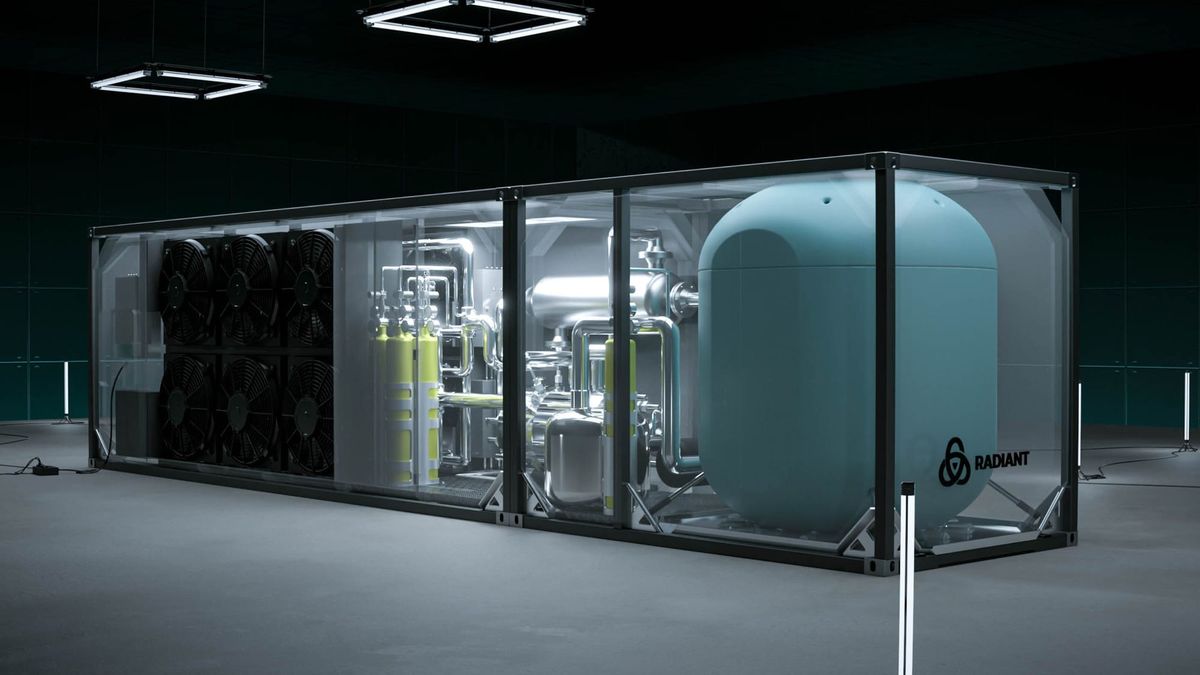
He is not alone. A cohort of founders shaped by software and spaceflight is pushing into the physical world's hardest industry, and nuclear has become a favored destination. Doug Bernauer, the chief executive of Radiant, spent more than a decade at SpaceX—engineering the first booster with landing legs, then Hyperloop—before leaving to build portable microreactors, which his company is preparing to put through a full-power test in the same Idaho desert this summer.
This article is for Vector members. Start a 7-day free trial to keep reading.
Start your free trial