Humanoids are for marketing, robots are the real business
Apptronik raised nearly a billion dollars to build a walking, general-purpose robot. Its own product line suggests the walking part is for fundraising, not the work
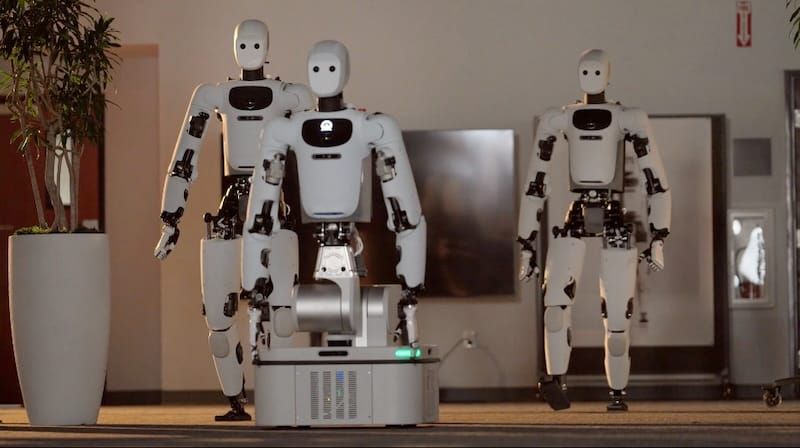
The Apollo that Apptronik showed the world at the end of June has two legs, a torso, a head and the general proportions of a five-foot-eight adult. The Apollo its paying customers keep asking for has a wheeled base instead. Apptronik, an Austin robotics company that has raised nearly a billion dollars to build a humanoid, now ships its flagship in two configurations, and the one destined for warehouses rolls. Logistics buyers, it turns out, want stability, battery life and predictability more than they want a machine that walks.
The case for legs is a good one, and the company has made it well. A humanoid is a general-purpose machine: one robot that can be taught thousands of tasks, Jeff Cardenas, Apptronik's chief executive, likes to say, rather than a thousand single-purpose machines each doing one. Because the built world is shaped around the human body — shelves at human height, aisles at human width, tools sized for human hands — a robot shaped like a person can, in principle, slot into a factory without anyone rebuilding it. That is the promise that has drawn Google, Mercedes-Benz, Japan's postal service and the Qatar Investment Authority onto the cap table, and carried the company past a $5 billion valuation.
Legwork
The question is what the flagship is currently for. In June Apptronik opened Robot Park, a 90,000-square-foot building on the edge of Austin that it calls a data factory, and described the latest Apollo not as a product but as a "training and data platform." Fleets of the robots move through the shed and through customer sites gathering the real-world manipulation data that Google DeepMind, the company's model partner and one of its investors, uses to train Gemini Robotics, the software that will eventually run the machine. The Apollo on display is not for sale, and is not really meant to be. Its job is to produce the raw material for the thing that will be sold: a later model, Apollo 3, which Cardenas has called the company's first true commercial product and which is not expected before 2027.
This article is for Vector members. Start a 7-day free trial to keep reading.
Start your free trial