
Microsoft decides being second in AI is no longer the strategy
Copilot's 6 million daily users — against ChatGPT's 440 million — made the case for him
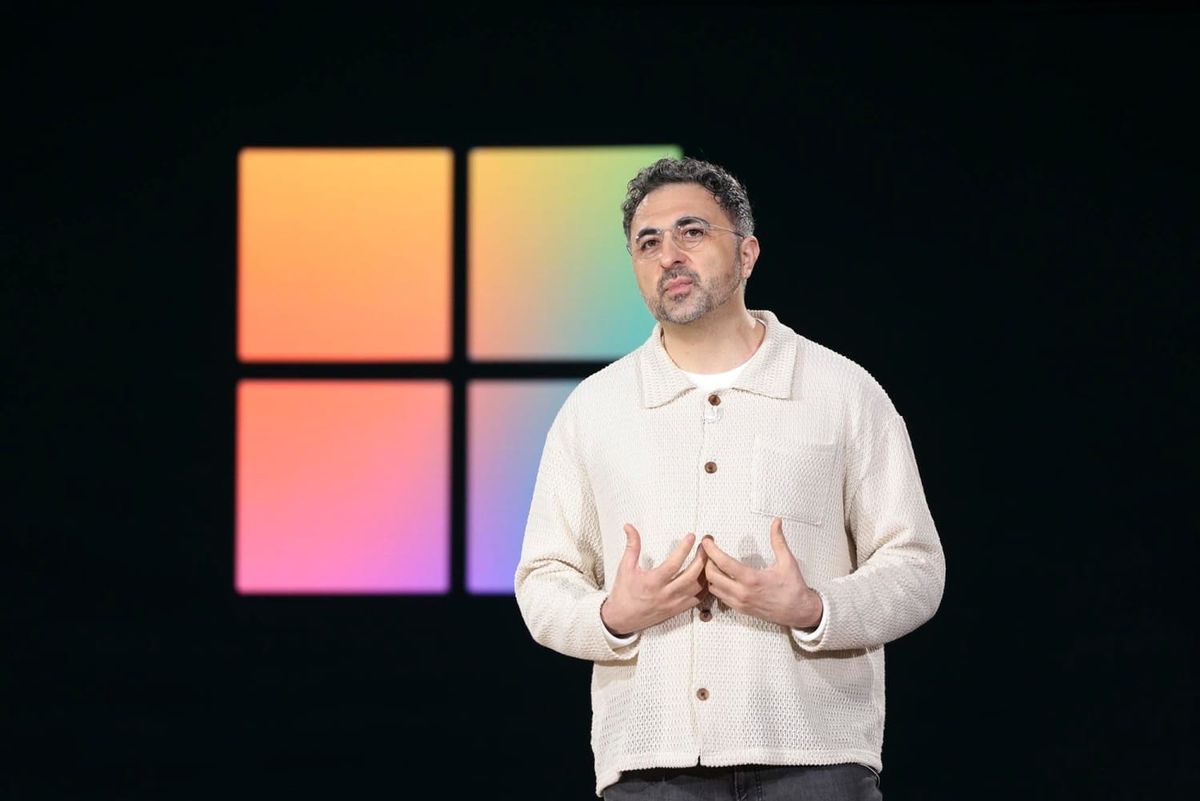
THE STRATEGY lasted approximately twelve months. In April 2025, Mustafa Suleyman — the DeepMind co-founder whom Microsoft had hired to lead its AI ambitions — laid out a doctrine of deliberate restraint. Microsoft would let the frontier labs sprint ahead, then build cheaper, more efficient models a few months behind. He called it "off-frontier," and he made it sound like a virtue. "It's cheaper to give a specific answer once you've waited for the first three or six months for the frontier to go first," Suleyman told CNBC at the time. "We call that off-frontier. That's actually our strategy."
On Thursday, that strategy was quietly buried. Suleyman told Bloomberg that Microsoft now intends to build state-of-the-art models across text, images, and audio by 2027 — not efficient second-tier alternatives, but the absolute frontier. The company has begun training on a cluster of Nvidia GB200 chips deployed last October and plans to ramp to frontier-scale compute within 12 to 18 months. For a company that has spent over $13 billion bankrolling OpenAI, the declaration amounts to a confession: distributing someone else's intelligence is not enough.
The pivot did not happen in a vacuum. A March reorganization stripped Suleyman of oversight for Copilot — Microsoft's flagship AI product for consumers and enterprises — and handed it to Jacob Andreou, a former Snap executive. Microsoft framed the move as letting Suleyman focus on what he does best; the numbers suggest it was also an acknowledgment of what had gone wrong. According to Sensor Tower data cited by CNBC, Copilot's consumer app had just 6 million daily active users in February, compared with 440 million for ChatGPT and 82 million for Google's Gemini. Among paid AI subscribers tracked by Recon Analytics, Copilot's market share contracted from 18.8% in July 2025 to 11.5% by January — a 39% decline in six months, enough for Google's Gemini to leapfrog it into second place. Microsoft 365 Copilot has 15 million paying enterprise seats, but that represents just 3.3% of the platform's 450 million commercial subscribers.
This article is for Vector members. Start a 7-day free trial to keep reading.
Start your free trial